Won't you consider registering with our site? You can unlock more features of the site, leave comments and even elect to receive our "Weekly Shoveling" - a summary of all the coolest stories added each week!
It's totally free and takes a few seconds. We don't give out your e-mail or personal information to anybody! Try it!
Welcome to BSAlert.com - This is the place to rant and rave about stuff that bothers you. Illogical things in the news, legal issues, class action lawsuits, toxic substances, government goofs, corporate hanky panky, misleading advertising, lies in politics or whatever!
Have an interesting, goofy or crazy story? Register and contribute to the site, or leave comments about stories we have online.
Why Register?
Some people are asking why should they register on BSA? Well, for one, you can receive automatic weekly updates of new stuff on the site; you can be notified of responses to threads that you post on, and we NEVER, EVER do anything with your info other than use it to notify you of these things. We respect your privacy.
Latest News: BSALERT T-SHIRTS! Yes, we have really cool, professionally-silkscreen BSAlert t-shirts! If you are interested in one, let us know. There are a limited number of them available, and we'd especially like to give them to site contributors.
As a bonus, here's a clean google search to add to your toolbar: Clean google search toolbar! This removes the annoying affilliate links like "epionions" and other sites that have very little content but appear high in search engine results.
Believe it or not, there's an explanation for what's happening in American society on a quantum level, from the popularity of crypto-currency, to our social and political divisions and even the insurrection at Capital Hill: America Has "The Oracle Problem."
It occurred to me the other day, America is suffering from, "The Oracle Problem" and it isn't just affecting dingbats who want to get rich quick with imaginary digital money. It's affecting tens of millions of people and creating a huge division in our society.
For those who aren't aware, "The Oracle Problem" is a philosophical/economic/social/technical issue involving "trust."
The basic concept is: In any exchange, trust is necessary in order to make such an exchange legitimate and comfortable.
The value of this has appeared when there's talk of "trustless money of the future" - the idea that for crypto enthusiasts, government is a bad guy, and cannot be trusted, so they need some alternative form of debt/value that doesn't depend on needing to trust the government will act responsibly or ethically. With Bitcoin, "math" rules the network, not "corrupt politicians" [supposedly].
Unfortunately even in the crypto situation, you still have to trust somebody. Instead of it being government (which in most countries is representative and ideally continually evolving to meet the needs of society), you end up trusting "the code", which is basically written by anonymous people who haven't necessarily demonstrated they are trustworthy. So whether anybody wants to admit it or not, with crypto, there's still a lot of "trust" that's needed: trust that miners are operating properly, trust that the software and hardware you're using to maintain your accounts is not corrupt, etc. Instead of putting your trust in a centralized entity that you have influence over, with crypto you put your trust in a bunch of random, anonymous people.
Nowadays, the information age has backfired on us. Our desire to have more and more sources for data has created a huge signal-to-noise ratio. This has resulted in things like cryptcurrency being somewhat accepted as legitimate, despite the fact that when you examine the actual evidence, it really does not offer any advantages over existing systems.
Likewise, our ability to pick and choose whatever narrative you want to believe, and then find somebody online "verifying" it, isn't limited to Ponzi schemes. It's affecting 70+ million peoples' perception of reality, from whether or not Covid is not worse than the flu, to the notion that the election was "stolen" from Trump.
America has an Oracle problem.
A vast amount of people no longer know who to trust any more.
When for every news network saying one thing, you have another network saying something different, you have a "trust" problem.
When the network that claims to be "fair and balanced" continually spouts lies and misinformation, you have a "trust" problem.
We saw the implications of this distrust manifest during the 2020 election, culminating in a large group of rabid Trump supporters actually attack the US Capital. Their "oracles" insist that the narrative they espouse is the one true reality.
So what can be done about this?
As a society we need to agree on who and what we can trust.
America traditionally had systems in place to help command proper trust: The Fairness Doctrine with radio and television. Public TV and radio stations also helped. Taking the private interest/commercial element out of news and information resulted in more fair and honest data being fed to the population. This has been systematically going away since the early 80s.
We have to have a standard by which we measure what is and isn't truth. It will be impossible to get everybody to agree, but we have to have more than half the population on board for it to work.
We do this by removing as many conflicts of interest as possible. This is why, for example, a non-profit entity is ideally better suited for doing charitable work, than a for-profit entity. That's not to say non-profits can't be corrupt -- we know that's possible, but due to the nature of the structure of how they're formed, they're more transparent and more able to pursue their goals without necessarily being hamstrung by significant conflicts of interest.
Well, here's a hearwarming story you can tell them...
The Bitcoin Bedtime Story - By AmericanScream
Once upon a time there was this technology scheme invented called, "bitcoin" that was supposed to be a type of "digital currency."
This supposedly futuristic "digital currency" was built around a complicated mathematical computer model that created a de-centralized database of transactions people called a, "blockchain." This was not new technology. It had been around since the 1960s and had limited practical commercial use due to its inefficient design. Nonetheless, this "Bitcoin" system was created as a proof of concept of a new way to transfer value from one person to another over the Internet, using data stored online, and verified by computers (called miners) who waste tremendous amounts of energy arguing with each other over who's copy of the database is the right one; eventually someone wins the argument and everybody starts over. That's what a blockchain is: a bunch of computers running around in circles trying to solve math problems, and along the way they keep track of some transactions.
The early adopters of this concept mainly consisted of tech people, mostly libertarians who were upset they had to pay taxes for things like roads, schools, parks and running water, and liked the idea they could hide value in the blockchain while still using government services they preferred to not pay for. They tried to get more people on board and "legitimize" Bitcoin by encouraging other people/merchants to use it as an exchange of value.
It went largely unnoticed for several years until various criminals realized it could be used to facilitate dark money transactions and laundering. These criminals' early adoption of the technology fueled an increased interest, and various other criminals and people involved in less than ethical business ventures climbed on board.
Unfortunately, Bitcoin never made a good currency. It was slower, less secure, harder to use, had more elaborate resource requirements, wasted tons of energy and was difficult to even properly explain to others how or why they should use it? Also its price was highly volatile and merchants soon found it wasn't worth it to accept Bitcoin for real world goods and services.
Now we come to a time in Bitcoin's history where perhaps it should have been clear it wasn't what people said it was, and instead, just an odd proof-of-concept that didn't have practical use.
Instead of acknowledging this reality, Bitcoin holders instead decided to "re-brand" their crypto, not as a currency, but as an investment. Then they started calling it, "digital gold."
The problem with promoting Bitcoin as an investment is... it has no intrinsic value. Even gold has material use. But Bitcoin is just a number in a computer. How can you convince someone that number actually has value? Bitcoin marketers would answer that by saying, "The same thing can be said about the dollar." which isn't really true, and is a distraction and doesn't answer the question, but they liked hearing that and kept repeating it.
Still, their "digital gold" needed some way to be tied to something of more recognizable value. So they invented what they called, "stable coins" which are other crypto currencies that are supposed to be 1:1 backed by fiat (ironically the same "dollars" they claim have no intrinsic value, they now used as evidence their crypto has value -- don't try to make sense of it, just roll with me).
Various exchanges began to invent their own "stable coins". These served as proxies for real fiat, and they treated the transactions as if they were in dollars, euro or whatever they were supposedly backed by. The most popular stable coin has become Tether, known as USDT in trading.
The developers of these stable coins claimed they were asset-backed. The problem is, like everything else in the crypto industry, there's very little oversight or transparency. In many cases, even the actual people behind these schemes or where they were physically located was unknown! Normally you might think that would tip people off that something is fishy, but to crypto enthusiasts, who think, "trustless money" is the future, this seemed kinda cool and edgy, and in their minds, it wasn't really something to be concerned about.
Being free from evil "regulation", these exchanges, like Bitfinex, casually blew off attempts to be legitimately audited -- something that is a standard practice in the "totally corrupt" normal finance and investment industry. Instead they just issued occasional press releases saying, "Everything is ok. Nothing to worry about." And crypto enthusiasts took them at their word, because why wouldn't you assume a crypto exchange's press releases weren't legit? It goes against the whole notion of trustless, de-centralized monetary systems, amirite?
So now, with the full confidence of the industry (as long as prices keep going up), companies like Bitfinex and their shadowy executives, continue to print and produce more USDT, claiming that, "It's backed... by something.... did we say 'dollars'... well if not dollars, then 'dollar like stuff', which is basically the same thing. We wouldn't even tell you this except we got in a little trouble with the New York Dept of Justice and they started asking a bunch of inconvenient questions that we don't think we should have to answer. Everything is ok. Nothing to worry about."
Fast forward to 2020, where USDT is the most traded security in the entire crypto industry. There's more USDT being traded than actual BTC. How did that happen?
Because number needs to go up.
Best way to make number go up, is to make sure there's "demand" for crypto. Best way to have demand is to create demand. When you create your own demand, it's much more reliable than waiting for "the market" itself to decide they want more crypto. So you print USDT, and then you trade the USDT for various other crypto currencies, back and forth, forth and back, back and forth. And the next thing you know, it looks like there's a ton of interest in buying crypto!
This children, is what some people call "wash trading." But people in the industry claim it's natural demand.
How exactly does it work? Let's explain:
Imagine if you have a teddy bear that you paid $3 for. I offer you $4 for it. Now it's worth $4.
But then you offer $5 to buy it back. Now where you had a $3 teddy bear, you now have a $5 teddy bear.
Awesome huh? Wait, but didn't you just lose $2 in that transaction?
Not with StableRocks!
Pick up some rocks, decide those rocks are now worth $1 each!
Use them to trade back and forth with your friend.
When you run out of rocks, pick up some more.
At the end of the day, your teddy bear is even more valuable! And when people ask what's backing up the $1 value rocks, point to the teddy bear (that is now worth more than $19,000!) Wallah! You are now a master crypto currency trader!
On Friday the 13th, there's scheduled to be a supposed mass exodus of people fed up with Facebook and Twitter, moving to a new social media platform that claims to be less censored. Is this really true? And what are those risking that sign up for this new platform?
Conservatives apparently have finally found their own SAFE SPACE and plan to mass-migrate to Parler following their loss in the US presidential election. Apparently they were fed up with social media networks like Facebook and Twitter "censoring" their un-scientific, un-factual posts about Covid-19 being a hoax, or Biden being the antichrist.... who knows.. who can keep track of the bizarre claims coming from them and their cyber militia.
One thing is for sure, where they claim to go, doesn't look all that much like a place that celebrates liberty and freedom and personal property in any objective sense.
Wikipedia says about Parler:
Parler is a United States-based microblogging and social networking service launched in August 2018. Parler has a significant user base of Trump supporters, conservatives, and Saudi nationalists. Posts on the website often contain far-right content, antisemitism, and conspiracy theories. The site has been described as an alternative to Twitter, and is popular among people who have been banned from mainstream social networks or oppose their moderation policies. The site markets itself as a "free speech" and unbiased alternative to mainstream social networks such as Twitter and Facebook. However, journalists and users have criticized the service for content policies that are more restrictive than the company portrays, and sometimes more restrictive than those of its competitors.
The owner of Parler, started the venture because according to their web site they were, "exhausted with a lack of transparency in big tech, ideological suppression and privacy abuse..."
John Matze was quoted in Forbes as saying, "There are going to be no fact-checkers. You're not going to be told what to think and what to say. A police officer isn't going to arrest you if you say the wrong opinion. I think that's all people want. That's what they like." In the Forbes interview, Matze describes himself as an arguer. "I don't have too many friends, but the ones I do have, we just talk amongst ourselves about ideas—crazy ones, easy ones, whatever."
Sounds like an idyllic community?
Among other things, users of Parler (as of this writing) have to cough up significant personal identification info, including but not limited to social security numbers, tax id numbers, photocopies of drivers licenses, passports and other forms of ID, that Parler will use to "verify" their ability to access basic features of the site that are available to most everybody without such restrictions and draconian, privacy-invading measures on other social media sites.
Here are some snippets from Parler's policies as of 11/20 (policy date 7/2020):
You gotta love the above "bonus consent" clause. In addition to doing whatever they want with the data you've given to them to use in a fully unrestricted manner, Parlor also MAY ask for your occasional permission.
Apparently Parler has continued to tighten their policies and restrictions, and as of this writing has amended their policies to be just as, if not more restrictive than other social media sites.
Medium.com's review of Parler had this to say:
Parler’s current community guidelines are more specific and less permissive, and it’s unclear why the company’s rules were changed. Whereas it once allowed “fake news,” it now advises users to “not purposefully share rumors about other users/people you know are false.” Parler previously discouraged fighting words; it now clarifies that rule as “a personal assault with the intention of inviting the other party to fisticuffs.” (Fisticuffs being a somewhat outdated word for fistfight.) The platform prohibits nudity, including female nipples, specifically, and any form of genitalia. Parler does note, however, that “buttock is acceptable.”
For comparison, Twitter forbids images of female breasts, with the exception of breastfeeding. Twitter allows parody or satire accounts but similarly draws the line at impersonation. Much like Twitter’s policy that resulted in the labeling of President Trump’s tweet last month — “When the looting starts, the shooting starts,” Trump wrote of protests in Minneapolis — Parler also discourages content that incites violence or produces a clear and present danger.
Last but not least, is Parler even close to what people claim it is?
Not according to the User Agreement:
If this wasn't enough, there are many examples (see Sources at the end of this article) outlining problems the platform has with taking personal information, falsely verifying accounts, and allowing people to impersonate other people and make inappropriate remarks. Yet the platform is still routinely censoring and sanctioning their own users. Here's an example screen shot:
BUT WAIT... THERE'S MORE
Online pundit Mindy Robinson shows that their terms of service make it so, while they can do whatever they want with your content, profit in any way and not have to pay you anything, if they're sued because of something you post, that's your problem buddy, and you even are responsible for their legal fees!
Only in a land where people believe pizza parlors without basements are running child prostitution rings in their basements, can you have a social media platform such as Parler be considered an "improvement" over what else is out there.
Bless their tiny, cold, hearts.. Good luck sheeple!
There's a new web site that is becoming increasingly popular among social media exchanges and people trying to find a way to wade through news reports and "find the truth through the bias."
One such site that's picking up traction is called, AllSides.com. But a look under the hood, or even a casual glance reveals it's not what it appears to be...
The site Allsides.com, positions itself as a news site aggregator that ranks online sources in terms of "left" or "right" leaning. Supposedly you can peruse current events and get links to what each side of the political spectrum thinks. Different sites/links are indicated with "R" or "L" icons of varying degrees to supposedly indicate how leftist or right wing their spin.
The premise seems to be, let's look at news from "all sides" of an issue, and those "sides" apparently are limited to a very small array of popular mega-corporate media that supposedly represent the vast political and ideological divide. (Spoiler: They Don't)
First off, the founder and CEO of allsides.com is a guy by the name of John Gable. He has a background of business and technology, having worked at Microsoft and later for various other tech startups. But his most notable work history relevant to this current project is the fact that he's not simply a republican, but he's a very active, non-centrist republican, having worked as an operative for a variety of hard core republicans, including Howard Baker, Trent Lott, Mitch McConnell, as well as the RNC itself.
Gable isn't just a registered republican. He's a bona fide republican operative and propagandist.
Having worked for Mitch McConnell who is unarguably credited with grinding democracy to a halt in the name of partisanship, at the expense of due process and the Constitution, and claiming you want to see "all sides" of anything, is the epitome of hypocrisy and hubris.
Now maybe Gable is trying to turn over a new leaf and save himself from retiring into a hot tub of fire later on, but a casual glance at his web creation shows this to not be the case. He's full speed ahead on pushing right wing agendas, now re-branding them as being "left" wing agendas also.
So what does Allsides consider left and right?
It goes without saying a web site run by a high level RNC operative is going to list a lot of right wing talking points. We don't need to argue over what they level at "right" - almost everything on the site is really right wing. What's more interesting is what they call left:
For one, apparently CNN is now always left, and often hard left. I'm not sure what exactly is "leftist" about CNN? They've never been anti-war. They're one of the many corporate news networks out there that is almost exclusively funded by advertisements by insurance companies, the one lobby most leftists consider part of the problem with our economy and culture. This is the network that wouldn't let the lies about Hillary Clinton die in 2016, helping the republicans stoke unfounded concern over her integrity. CNN was one of the institutions that made Trump happen. CNN has a long history of sabotaging democratic candidates, including their infamous destruction of Howard Dean because he said, "Ye Haww!" too loud at a campaign event.
So where is the liberalism coming from CNN? Is calling Trump's lies, lies, being "leftist?" Apparently so.
The network's most recognizable anchor, Wolf Blitzer. Is he leftist? This is a guy who was formerly head of AIPAC. The institution making sure the US perpetually funds the middle eastern civil war to the tune of $6B a year. Not very left leaning IMO.
But what about Anderson Cooper? He's gay. He must be liberal right? Anderson in reality is a bona fide, blue-blooded oligarch, son of Gloria Vanderbilt and heir to that empire. He comes from a castle just like Tucker Carlson. He may have some thoughts about basic civil rights for all, but he's a long way from being that concerned about the working class, a group his family has probably literally built moats to separate themselves from.
So what else is apparently "left" according to allsides.com?
Bloomberg. Really? The publication that panders to Wall Street is leftist?
Politifact - the non-partisan fact checking web site is categorized as "left." As is the New York Times.
Allsides also calls the Center For Public Integrity a "leftist" organization. This is an award-winning, non-partisan, quite transparent, non-profit organization that uses freedom of information act requests to report facts on what government is doing. Facts and their pesky liberal agenda!
Scientific American? Yea, bunch of left leaning people there with their evidence and peer reviews. In the example above, a Scientific American article on how to avoid misinformation was labeled too "left".
Vice.com? The news site that was founded by the same guy who founded the alt right domestic terrorist group, Proud Boys? Yea, Allsides considers them hard left.
And what's centrist? Christian Science Monitor? Really?
What appears to be a site metering out "all sides" of issues, is in reality, doing nothing of the sort. It's giving you mostly the same side of all issues, the corporate side, and pretending these positions are appropriately spread across the political and ideological divide. They are not. This is a thinly-veiled attempt to further a hard right agenda, by continuing to paint right wing and centrist positions as left-leaning.
But perhaps the most egregious sin of them all, is right in front of everybody's face.
The idea that we need to know both left and right sides to an issue, with no actual concern over what is and isn't factual? Where does evidence, logic and reason play into this spectrum? That apparently is not worthy of being enumerated.
Welcome to the next installment of "Logical Arguments For Sociopaths". Some helpful tips for explaining to un-empathetic people, why doing something for the good of the community, might be something they should consider.
So, according to you, there's some "controversy" over whether or not people should wear masks in public? You don't see a good enough reason to follow along with all the other "sheeple" eh?
You think this whole mess is not any worse than the flu and nobody's running around with masks during flu season, so why bother? Ok, we're not going to confuse you with facts and scientific references suggesting you know nothing about these issues, that'll just make you angry and even more defiant. We're not going to explain the reasoning behind how masks protect other people, because, well, caring about other people requires more empathy than sociopaths typically have, so what other arguments are there for wearing masks in public? How does it serve YOUR interests?
1. You're not being a "maverick" not wearing a mask in public. You basically come off as a douche.
Deciding you're not going to follow what's in the best interests of the community, might have been cool when you were 21 and had your first car and did burnouts at every stop light, but at your age now, it reflects poorly on what little wisdom and judgement you might actually want to portray.
2. If you don't wear a mask, it will be hard to execute your constant need to be indignant, preachy, judgemental and self-righteous.
You know how much you like to look down upon others. You can much more easily do this wearing a mask. Think of all the more caustic passive aggressive things you can whisper in the company of others without people seeing it came from you? That'll certainly give you some excitement, and just imagine the potential thrills you may get if you encounter in the checkout line, a minority not wearing a mask! You might even be able to organize some sort of passive-aggressive lynch mob of nasty looks among other mask-wearing brethren in line.
3, Never mind those pesky facts and research that suggests you're up to 70% more likely to contract the virus not wearing a mask, remember that according to your news source, every time a conservative dies, Obama and Hillary are at the border, allowing a Mexican rapist to enter and take their place. Do you want to risk contributing to "the great replacement" by reducing the life expectancy of those in your tribe?
Are you having trouble explaining to some of your friends why it is not a good idea to immediately flip back to normalcy in the wake of a pandemic outbreak?
We feel your pain. Announcing a new series called, "Logical Arguments For Sociopaths"... a way to explain the value of empathy to those who seem unable to find it in their personal interests to give a shit about anybody else.
In this installment we tackle the question:
WHY IT'S NOT A GOOD IDEA TO OPEN BUSINESSES BACK UP TOO SOON?
We won't bore you with all the liberal conspiracy nonsense about giving a damn about whether people live or die. You've heard it before, and it doesn't affect you, right? So what logical arguments might make more sense?
IF YOU OPEN UP, YOUR BUSINESS WILL STILL BE CRIPPLED.
Since you're one of them "mavericks" that is willing to be bold and jump right back to normalcy, you might bring in a little bit of revenue, but the sad fact is, a bunch of losers who are overly concerned with killing innocent people, are still unwilling to patronize your business. You will still probably have the same expenses, but your income will be a lot less. It may even be that you lose more money staying open than if you had pretended to care, and followed experts' advice to continue quarantining.
Even if you're right about being a safe time to re-open, you probably won't be very successful. Until more fancy-school-lernin so-called "experts" weigh in, a huge percentage of the people won't be out and about.
IF YOU'VE MADE A MISTAKE IN OPENING TOO SOON, THINGS WILL BE EVEN WORSE.
In the off chance there is another increase in outbreaks, then everything resets again, including more quarantines, harsher restrictions and more serious penalties for those who ignore the dictates.
Also, you're going to be immortalized as someone who screwed up, and people are going to remember.
The cost/benefit for trying to open too soon, doesn't look very favorable for you.
IS "GOING BACK TO NORMAL" REALLY A GOOD BUSINESS MOVE IN THE FIRST PLACE?
You love the "free market" right? You despise welfare and handouts. You just want things "back to normal." That sounds great in theory, but this only really works if there's a reliable vaccine and a way to effectively get it delivered. And virtually everybody feels that's at least a year or two away.
So there is no "normalcy" really possible despite your Prayers™. (And let's not forget, your God created Covid-19, or at least the Chinese who fabricated it along with the lizard people who funded it from their secret department within the Federal Reserve). So this idea that you can just open back up and be 'back to normal' isn't likely.
MEANWHILE, there are all these other businesses that are doing something interesting called "pivoting" -- Instead of complaining that their lives are over, they're adapting and coming up with creative, alternate ways to run their business and generate revenue, even within the confines of liberty-stealing public health rules!
Why waste time waving overpriced, over-railed assault weapons at city hall demanding the impossible, that things should go "back to normal?" Your fellow competitors are coming up with cool, new ideas and ways to conduct commerce while you're screaming on the capital steps. Not sure that's going to work out great for you.
So as you can see... this really isn't about "saving people"... it's about saving yourself. Be careful what you wish for.
It may be time to admit that young people's support does not automatically translate to young people's votes.
As we emerge from a gobsmacking Super Tuesday, 78-year-old Bernie Sanders continues to be the Youth Candidate. He won voters under 30 across the 14 states up for grabs on the Democratic primary's biggest night so far, often by outright majorities. But thus far, reports of a revolution have been greatly exaggerated. There is no evidence at this point that Sanders's core promise, that he will attract millions of new voters to the political process—particularly young and working-class people of color—to dramatically remake the Democratic coalition, will come to pass. It doesn't matter how much young people like you if they don't show up to vote. It's one of many reasons Joe Biden has risen from the dead.
In Virginia, where the first signs of Biden's Lazarus act popped on the screen, voter turnout nearly doubled from the 2016 Democratic primary. 1.3 million votes were cast. This sounds like good news for Sanders, who wants to expand the Democratic electorate. Except just 13 percent of Virginia voters were under 30, according to USA Today, down from 16 percent four years ago. Sanders won 57 percent of them—down from 69 percent in 2016. Granted, that was just a two-horse race, but the larger issue here is that it looks like the lion's share of these new participators came to participate on Biden's behalf. He won 130 of 133 localities, and by 30 points overall.
The trend continued across the southern states that solidified Biden's good night. In North Carolina, a state that, like Virginia, will figure significantly in November, the numbers were pretty much identical to VA: 13 percent of voters were under 30, down from 16 percent four years ago, and Sanders took 57 percent of them, down from 69 percent. In Alabama, only seven percent of voters were between 17 and 29, compared to 14 percent in 2016. (Sanders did up his chunk of that vote to 60 percent.) In Tennessee, just 11 percent were under 30, down from 15 percent four years earlier.
In California, the cornerstone of Sanders's great western firewall, just 14 percent of voters were under 30, according to the Washington Post. Sanders won 57 percent of these folks, along with 52 percent of voters 30-to-44, on his way to winning the state. He also did better with older voters out West than anywhere else, nearly matching Biden with voters 45-to-64. He won white voters, Hispanic voters, and Asian voters, while Biden continued the strong performance with black voters that powered his surge throughout the nation.
In the end, it was Sanders's inability to make inroads with black communities in South Carolina and throughout the South that has stripped him of the sole frontrunner status he enjoyed coming out of Nevada. The six-in-10 black voters who broke for Biden in Texas likely delivered him that state. This was the wall Sanders's campaign ran up against in 2016, and it does not look like his work over the years since has been as effective with these folks as it has been with Hispanic voters, with whom he has dominated this time around. Sanders is still very much in contention, but he's got to find a way to connect with the cornerstone of the Democratic base. To win, he'll have to build a more standard Democratic coalition.
That's also true because this lack of revolutionary energy in the electorate is destructive to Sanders's general-election arguments. In the 2018 midterms, Democrats powered to control of the House of Representatives largely due to big gains in the suburbs. These are people, particularly relatively well-off white women, who are not particularly enamored with left policy but who are sick of the current leadership. There is ample reason to believe that Sanders would struggle in these areas. To make up the difference, he needs a massive turnout of new voters—young people of color, working-class voters who previously saw no reason to participate in politics—to essentially form a new Democratic coalition. Maybe these people are less inclined to participate in a primary than in a general election. Maybe if Sanders won the nomination, they'd come out for him in the kind of numbers he needs. But at the moment, there is little reason to believe this.
On the other side of things, Joe Biden could thrive with exactly that kind of suburban voter. His whole campaign is geared towards The Trump Exhausted, as he prioritizes decency and healing and the prospect of not having to hear about the president's dumbass antics every day of your life. This is appealing to many, particularly the older, richer, whiter folks who most consistently vote. It is a safer bet, on paper, if Democrats want to hold their House majority. But the core question for Biden is whether he can generate the kind of enthusiasm that Hillary Clinton could not, when he is largely not promising any kind of transformational change beyond removing a blight on the republic from the White House. Can he attract working-class voters who think the economic system is rigged against them when he's promising to return things to the last years of the Obama era?
EDIT: Note that this article was originally written prior to the 2016 election, it still contains very useful information on the dynamics of the upcoming 2020 election...
*BSA Exclusive Editorial*
I dig Bernie Sanders. I've always loved him and his perspective. I agree with 99% of what he promotes in terms of long-term policy. But I still find myself uneasy with his candidacy. I will vote for whoever gets the Democratic nomination, but I'm not convinced people understand the dynamics and what's really in play right now?
As many of those on the left and the "disenfranchised" are "feeling the Bern" and hopping on the Bernie Sanders bandwagon, theres a schism developing among those who pine for social change.
It seemed hard to fathom that a candidate that has been so succinctly enumerating many of the problems people on the left, center and right have been harping about has now become so contentious?
I gotta be honest.. to me it feels like another Deja Vu moment. How I felt when I heard all my friends get so excited about Ralph Nader in 2000, and how his fresh rhetoric was going to change the political landcape...
It doesn't seem to make sense. Even among the editors at BSAlert, there's contention on the value of a Sanders presidency. Allow us to provide you with what we think are some troubling issues with Sanders and why we feel, as much as we love what he says, In my opinion (though not the opinion of everybody here) Sanders is a pied piper more than he is a path to change...
If all you want is Bernie elected; if all you care about is "sending the message" ok, I can't argue with that. But if you care about actually seeing his policy ideas executed, and moving in a more progressive direction during the next 4-8 years, you have to at least be open to these arguments...
1. What Bernie Sanders promises he cannot deliver
The 800 pound elephant in the room, the over-arching reality that Sanders supporters refuse to accept, that true pragmatic progressives cannot ignore, is the idea that "President Sanders" can accomplish what he preaches.
Unfortunately, that is technically impossible right now.
Yes, the President can sign executive orders. He can direct the military here and there. He can veto bills. He can appoint supreme court justices. He can give speeches and act as a focal point for ideas on social change, but in the end, the president is basically a symbolic representative more than he is an actual instrument of change. He's better at stopping change than he is affecting change.
On matters of the military, the POTUS is paramount. A non-warmongering president is of critical importance, but on all fronts, the real power is in Congress. Yes, the president appoints supreme court justices, but Congress confirms them.
Our founding fathers were well acquainted with the problems of singular ruling forces, which is why they made sure the majority of our nations real power rested not in the president, but in a collection 535 elected officials who make up Congress.
Congress is the "engine" of America. It determines whether our nation moves, and at what rate. You can turn the steering wheel on a vehicle left or right, but without momentum, it's not going in any direction. We've seen this principal in action the last 7 years as Obama's congress shut the engine off and shoved the key up their asses.
Sanders, having been a member of both houses of Congress for decades, knows this fact all too well. He's even made mention of this reality, but he doesn't seem to be bothered that at this point, Congress is more obstructionist and opposed to his ideals than they've been in 40 years. It's pretty disingenuous to suggest change can happen if he's elected without an equally significant "revolution" in Congress, which isn't happening, which he is not bothered by.
2. Like those on the right, Sanders is a divider, not a uniter
While Sanders at this point has been gracious enough to not be attacking his fellow nominees, the same cant be said for his followers who are ramping up anti-Hillary smear campaigns in every corner of cyberspace.
This isn't unexpected, because Sanders campaign by definition is a mirror image of the tea party agenda: blame all the country's problems on "the other side". Whereas the tea party's strawmen are "liberals." Sanders strawmen are the "1 percent".
Before I get accused of employing a false equivalence fallacy, let me unequivocally state I in no way think that the left and the right are equidistant from the truth or the proper path to a better country and community. Nor do I think that most of what he says is untrue. Not. At. All. But I do notice both Sanders and the GOP are using divisive, disingenuous tactics to promote a pseudo-utopian idealism that ignores lots of other problems, that assumes many entrenched institutions will simply bend over and allow themselves to be shafted in the name of "equality and justice." Neat idea in theory. Never works in reality.
Furthermore, American politics has been dominated for the last 50 years by a finger pointing mentality. A need to blame our country's problems on "those people". A rallying cry to team up in order to "not let the other guys win." People no longer vote for an ideal. They vote against the enemy. Even though it seems people are voting for Bernie Sanders, the reality is, they like him because he's taken aim at their common enemy and he is very blunt about it. They find that refreshing, but it's still a mentality that splits our population into disparate groups who seem to either be the solution or the problem, with nothing in between.
Gone are the "it takes a village" arguments in this campaign. It's all about dismantling the enemy and his infrastructure. It's about declaring war on the 1%, which sounds great in theory but nobody is going to make those people and institutions lay down and die. And whether we like them or not, they're part of what makes things "tick." We need to change their priorities more than we need to destroy them. We need to begin making them understand why "the good of the many outweighs the good of the few" and how this also benefits the 1%, but that requires the promotion of unity, not division. It's not something Sanders preaches. His strategy is similar to the "winning the hearts and minds of the people" by invading Iraq.
If this weren't enough, in contrast with Hillary's tireless fundraising of tens of millions of dollars to help with fellow Democratic campaigns, Bernie has done zilch. Yes, he'll occasionally squeak out a statement about the importance of changing Congress, but he has been exclusively representing himself at most of his campaign rallys, whereas Clinton has been emphasizing her party. It's no reason Bernie isn't getting much love and support from the Democrats. He's not really a Democrat. He's been an independent and only jumped on board to get the media attention and has done little for the party that he would require to support him should be become elected. When a candidate has alienated much of his own party, what chance does he have?
3. There's too much at stake in this election
Sanders supporters will find this statement ironic. But they are also not looking at the big picture: Every other branch of government is now controlled by not just republicans, but extreme right wing republicans. The Supreme Court is barely holding on to any centrist views, much less anything progressive. After the last election both houses of Congress have fallen to a GOP majority. The tea party is continuing to gain ground. Even so-called "liberal media" like NPR have morphed into parroting the corporate agenda, fluffing the fossil fuel industry and beating the drums of war in the middle east.
While Obama unsuccessfully tried to get things done from the White House, the right and the money behind them, now unfettered by campaign finance rules, allowed them control even more of Congress. The only thing holding back the reversal of fifty years of progressive legislation is the guy in the white house.
This is an election the democrats cannot afford to lose.
This is not an election that a small-time guy from a small-time state, whose never been much of a target, or much of a threat to the status quo, should be tossed into an arena full of blood-thirsty lions.
We can't afford to not have someone in office who has dealt with these institutions before. Who is battle-hardened and has demonstrated she can take what they can dish out and still come out more ahead than behind. Someone whose every weakness has already been probed. If we fail, we don't simply lose the white house, we lose the supreme court, possibly for our lifetime. We lose healthcare. We lose gay rights. We lose women's rights. We lose our reputation among the world we've been slowly repairing since Iraq. We lose our civil liberties to "keeping us safe from boogeymen." We lose the battle to separate church and state. We lose science to theology. We lose our last chance to migrate away from fossil fuels and stop environmental catastrophe.
Sanders people think now is a time for attack, for change. The reality of the situation is, the left isn't ready for any attack. We don't have the kind of army the right has. We don't control any other branches of government. We don't have any loyalty among our community. We don't have nearly as much anger or commitment. We don't have an array of churches coast-to-coast who will bus their people to the polls. We don't have networks of thousands of radio and tv stations promoting our agenda 24/7. The painful reality is until we gain more ground, we are the defender, not the aggressor.
This doesn't mean anybody is "giving up." It simply means, we should be smart and not sacrifice what we've gained in an effort to move forward. It would be better to move forward a few steps, than risk losing everything in an aggressive assault with a new guy who doesn't have a track record of surviving these high level battles yet.
Bernie Sanders isn't leading a revolution. He's a young, outspoken commander of an undisciplined army, more rebellious than lawful, more reactive than proactive, less experienced than battle-tested, that refuses to admit it's out-manned and out-gunned.
We lose a lot if we lose. It's not a game. While some may think Sanders' opponent is part of the system, she's not. She has demonstrated she can stand up to the right.. and most importantly, live to tell about it. Whether Sanders can do that, nobody knows. It's a huge risk.
4. Sanders does not mobilize minority voters
Obama was a diversion from the prototypical "old white guy network" that has controlled the world since the dawn of modern civilization. His campaign was a sign and a rallying cry for millions who previously felt detached and disenfranchised. Likewise, Hillary could be poised to be the first woman President -- quite an elevation in the stature of a social class that less than 100 years prior, didn't have the right to vote at all. These are powerful, progressive signs.
Like it or not, the election of an old white dude like Bernie Sanders doesn't mean much symbolically. And America's minorities and women know this.
Yes, yes, "But Bernie is different! He's saying all these cool things..."
Wow. No old white guy has ever spouted populist messages before, right? I'm sure this time the blacks, the women, the hispanics, etc. are going to believe him and run to the polls... I wouldn't bet on it. The research indicates otherwise. The main people at Sanders' rallys are white people.
There's a very good chance the huge minority vote may sit this election out if it's between two old white guys. They've seen that episode before and know how it ends.
5. Sanders has yet to face the media hate machine
It's funny that many Sanders supporters have such a sour taste in their mouth about Hillary. Yet believe he is more "trustworthy" even though he's never been subjected to an intense grilling by the "lamestream media." You have to wonder if the same force that made Hillary "America's least trusted woman" couldn't have an impact on his reputation?
So far, Sanders has been ignored. That's about the worst you can really say about him and how he's been treated in the media. Very few institutions have put him in their crosshairs at this point, even though there are plenty of questions. His opponent has nothing but mostly nice things to say about him. Sanders' ability to deflect criticism is mainly limited to some snarky responses to select media pundits feeding him lines he's practiced rebutting for the last 20 years. He's very good at that.
Give him credit: Sanders is very good at steering a two-way conversation away from strawmen and red herrings, towards the real issues.
But what if the conversation isn't two-way? What happens when it's a tv commercial that doesn't give him a chance to snap back? What happens when mainstream media and its army of pundits-without-opposition begin bearing down hard with their ludicrous opinions of who he is and what he stands for? How does Bernie defend against that?
The painful reality is the right have an unparalleled ability to project messages in mainstream media that are unanswered and un-contested. They could make Ghandi look lie a serial killer to the populace. They can take the most innocuous of issues and turn them into life-threatening drama. It's what they do best. And Bernie has never had even a taste of that served up to him yet.
6. There's something eerily wrong with the most progressive candidate in the race also being the oldest.
The average age of Americans is about 37 years. Bernie is 74 years old. The average life expectancy of a male in the United States is 77. There's a statistically-decent chance he may not live out his first term.
While Bernie seems healthy and cogent now, so did Ronald Reagan, who was the oldest person to be elected president when he was 69. Bernie is five years older than when Reagan was when he took office. And we know what happened to Reagan a few years later. It's a scary thought.
Beyond this, the painful reality is Bernie will never see the results of any of his policy recommendations. Our country really needs someone who will be around longer, who has a material, vested interest in making the world a better place.
Bernie's age, coupled with his defiant, outspoken demeanor, portray him as the quintessential Cantankerous Old Fart. The only thing missing is him repeatedly screaming at people to "Get off my lawn!" To his followers, he may be the "wise grandpa" but to many others he's the crazy dude at the senior center that thinks he's still in Okinawa and the Japs are coming!
In many cultures age is equated with wisdom and experience. Not in America. We worship the young and the beautiful. We save our most cherished pedestals for the pridefully-ignorant and mediocre among us. With few exceptions, the intelligent are more feared than appreciated. America wants political leaders who are un-intimidating, mellow and friendly. Bernie is none of that.
7. Bernie Sanders' supporters are probably not truly committed
They don't want to hear it. They refuse to hear it, but it's true.
Bernie Sanders supporters love what he has to say. They desperately believe he can make the world a better place. They believe in his ideas.
They're just not willing to work that hard to make it happen.
If you examine Bernie's rheotric, you will see that it parrots the "Occupy Wall Street" movement almost precisely. What happened to those guys? Why did that die out? Because while at first they had a wave of support, in the end, those pushing for change got tired, bored, distracted, and went on to other things. There's no evidence that Bernie Sander's supporters are really willing to back him up in the way he would need to be backed up in order to succeed. Sanders' fans simply want to press a button, click a mouse here and there, and then sit back and let him do all the work. They aren't in it for the long haul necessary to protect him from the inevitable onslaught of shit that threatened institutions he's up against will unleash. They'll turn tail and run at the first sign of inconvenience (see what they did to Obama as soon as he didn't execute everything he planned).
Another example of Sanders' supporters unwillingness to "walk the walk" is in their almost non-existent interest in the upcoming Congressional elections. Even if Bernie were to become president, without a complete change of the house and the senate, his agenda has no chance. If you want to watch a Bernie Sanders supporter go catatonic, ask them about who's running in their congressional district. They'll change the subject faster than you can say "Gerrymandering."
Real change requires more than swapping out the guy in the driver's seat. If the vehicle has no engine and there's no roadmap other than, "away from there!" you're not going anywhere. Sanders supporters don't want to think about the painful reality that political change requires compromise and small adjustments instead of one glorious 180-degree turn. The moment they realize that won't happen they'll be moving to another pumpkin patch with their "Welcome Great Pumpkin!" sign.
Bernie doesn't care that his followers have a short attention span, because he's at the twilight of his political career and this is a last gasp. But others who will be around the next several decades can't get on board a movement that really has no solid foundation.
8. Bernie has way too many qualities that make him de-facto un-electable at this time
People hate polls. Polls and surveys can and do lie. And they should never be totally trusted, but there is truth in data. The key is recognizing and stripping out bias as much as possible, and if one does this. If one examines the reality of the voters and what principals and values they are motivated by, there are things we know they like and things they dislike.
For example, Bernie is Jewish (culturally). There has never been a Jewish president or vice president. Jews make up approximately 1.4% of the American population. Like it or not, Americans vote for people "like them" - the more minority a group is, the less likely they are to get support from the mainstream. It's less a function of anti-semitism than it is a painful reality that tribes like to stick together.
On top of this, it's widely known that Bernie isn't simply "non-religious" but that most feel he doesn't really believe in god(s). He's skirted the issue but the atheist community claims him as one of their own. In surveys among the public, non-believers polled as the least-trusted group of them all. There's likely to be a president who's gay, transgender, half-black, half-hispanic, Jewish, convincted felon, member of ISIS than a guy who doesn't believe in god. The mainstream media can have a field day with this. The GOP would love nothing more than for Bernie Sanders to get the Democratic nomination because they know they can destroy him on the virtual of his non-religious stance alone. They've cultivated a huge voting block of theists that cross party lines and believe that in the absence of religion, there's no real reason to be moral. They'll jump on this and easily make Sanders as well loved as Madalyn Murray-Ohare.
Let's examine Bernie's political history: He's been an outsider his whole life. Contrary to what some claim, he's not that good at reaching across the isle and compromising. He's been in the house and senate for 20-30 years and only got three bills he authored passed, and two of them were renaming post offices. He represents one of the tiniest states in the union and has a most homogeneous population of 94% white people. Blacks in his district represent 1% of the electorate. He's a white man's white man. He's never really had to appeal across cultural and social boundaries in order to become elected. He's pushed for a lot of legislative changes, but very little of it has ever seen the light of day. He's a great guy to have in Congress to oppose evil, but not effective at implementing good.
On a personal level, Bernie is a cornucopia of "un-presidential" activity. Unlike Obama and Clinton, he's been married multiple times. He has one child born out of wedlock to a woman he casually dated. He's no "rhodes scholar", he got a commonly useless degree, a BA in political science - known to all of us as a "let's party degree" more than anything else. Bernie has no noble work history. He was basically unemployed through huge chunks of his life, just hanging around doing stuff until at the age of 39 he decided to run for Mayor in Vermont. And then he just stayed there and focused on becoming a world-class curmudgeon.
And then there's the "socialist" label. Bernie wears it with pride and his followers love to point out the distinction between a "democratic socialist" and other kinds of socialists. Isn't that cute? They think Fox News, CNN, Talk Radio, and the Koch Brothers really care to know the difference and will be sure to help the American public appreciate the unique coolness that is "democratic socialism." Um, yea, I wouldn't hold my breath on this. But there's evidence he's more of a hardcore Soviet-style socialist than his fans think.
But wait, there's more! How about an essay he wrote in the 70s where he suggested women fantasize about being raped. The infamous "rape essay" is one of the many bombshells much in the community haven't seen dropped. Talk about alienating the female vote!
When you look at how easily public opinion can be swayed over the most casual of contentions, it's obvious Sanders opponents have a huge arsenal of questionable things they can deploy to make people re-think how viable a candidate he would be for the white house. Again, Sanders' followers super-glue the rose-colored glasses over their eyes, but not all of us can afford to be so hopeful when so much is at stake.
What other prominent progressives are saying...
Barney Frank: Bernie Sanders has been in Congress for 25 years with little to show for it in terms of his accomplishments and that’s because of the role he stakes out. It is harder to get things done in the American political system than a lot of people realize, and what happens is they blame the people in office for the system. And that’s the same with the Tea Party. It’s “I voted for these Republicans, we have a Republican Congress, we voted for them, they took over Congress, they didn’t accomplish anything.” You gotta win at least two elections in a row.
The Atlantic says Bernie Sanders is a Fraud: "The lack of support for Sanders among elected Democrats may also reflect his lack of support for them. During 2015, Clinton raised $18 million for other Democratic candidates, while Sanders did no fundraising for them at all. Those are just last year’s numbers. The difference in party fundraising between them going back decades would surely be even more dramatic. After all, before this campaign began, Sanders was emphatic that he was not a Democrat."
Rebecca Unger in the observer.com says"This is not about disagreeing with the message Bernie is preaching to Americans?—?I happen to agree with a lot of what he says. This is about the simple fact that his is an idealistic, naïve agenda that could never be put into practice in America. In this country, to legislate even one tenth of such an ambitious plan would take degrees of cooperation, sacrifice, even manipulation and such an immense amount of ‘give-and-take’ tactics that an idea that once stood untarnished, glistening at the campaign podium, would come out looking like a child’s napkin after a meal of spaghetti Bolognese."
Other issues include while Hillary Clinton has released tax returns since 2001 (and been savagely criticized because of her income sources by Sanders and his people) Bernie sanders has yet to fully release any of his tax returns.
None of this makes you the slightest bit concerned? Ok, fair enough, but please understand what you're in for...
Bernie is like a "special needs person." He's very lovable. He has awesome ideas. He's a great person with good intent, but as evidenced over the past 30 years, he is not capable of accomplishing things on his own and requires help from those around him. He's been living in a sheltered area of the country where he's been able to live comfortably, but now he wants to move much further out into the big, huge world. He does not realize how scary and dangerous it can be. All he's ever known is... Vermont. Vermont is not like the rest of the world.
If YOU want to adopt Bernie, you have to understand what you're in for. This is not a single vote, or signing a piece of paper and saying "ok."
If Bernie gets the nomination, every other day, he will be sticking his hand into an angry hornets nest. You can't abandon him. You're going to have to be there to take care of him CONSTANTLY, to totally back him up. He's nowhere near as capable in the real world as his non-special-needs sister, Hillary. Hillary can take care of herself. She's been out there longer. Bernie has yet to face what can happen outside of his sheltered space. Bernie likes to play with the docile puppies in his neighborhood but doesn't realize how vicious other, larger dogs can be, especially when you take their bone away. He will challenge powerful forces that can easily destroy him if he isn't continually backed up by his family.
This is a "lifetime commitment" if you adopt Bernie. So please be prepared for that or else you'll let his enemies win.
There's tremendous hype all over the Internet and the media about Bitcoin, crypto-currencies, "blockchain" and this new "innovative technology" that is supposedly making people rich.
Or is it?
Is crypto currency the future?
Are you actually doing any "investing" when you purchase and hold crypto-currencies?
Or is this an elaborate Ponzi Scheme or an outright scam?
Let's cut through the chatter and reveal what you need to know about the modern state of crypto currency, the "blockchain" buzzword everybody is using, and whether this is something real, or nefarious?
Is crypto currency a scam or an amazing opportunity?
You can't afford to ignore the critics and skeptics if you really care about your money... Let's jump into the deep end and talk about EVERYTHING!
Those who have been in the industry for awhile certainly know what "crypto" is, but now laypeople are talking about it, so it's important to cover some of the basics:
What is crypto-currency?
In a nutshell, crypto-currency (of which there are literally tens of thousands of different systems) refers to a proposed method of trade that involves "digital currency".
What does that actually mean? Digital currency? It is currency, which is unlike traditional fiat currency and exists primarily as a "digital address" and sequence of codes.
Whoever has the code, owns the currency. If someone guesses/steals your code and executes a transaction with it, you just lost your crypto-currency. It's called "crypto" for short, because, supposedly the details of these codes are encrypted in various ways for your protection.
What is fiat currency?
Traditional fiat currency is often represented in coin and bill form, and is something you can hold in your hand and is easily transferable. In the case of the US dollar for example, it's mandated by law to be accepted virtually everywhere in your community.
Yes, traditional fiat currency can also be represented in "digital form" similar to crypto currency, as indicated in computers controlling peoples' banking accounts, but is subject to much more oversight and regulation. And there's a system to quickly and easily convert your banked currency to material form if needed.
Is there a material component to crypto currency?
Crypto currency, sometimes referred to as "alt-coin" typically does not exist in any material form. Like "fiat currency", it's a "placeholder" that represents a certain value that is used in the exchange of goods and services between parties.
But unlike traditional fiat currency, it doesn't translate well to bill, coins or other material items that can be physically exchanged. This is because what determines who owns the currency is based on who has the codes. You could print a bill that had the code on it, and that could technically be transferred to someone else, but every time crypto is transferred, these codes change. Plus a print of a code doesn't mean someone else doesn't also know the code and can take the currency without having access to the bill.
What is a "blockchain?"
This is a fancy new buzzword, and it's being used interchangeably with the term "crypto-currency" nowadays by various institutions who want to capitalize on the popularity of crypto.
Blockchain refers to the method by which many crypto currencies keep records of transactions.
A blockchain is basically a database of transactions, typically involving a few basic elements of information: the id of a buyer, the id of a seller, and a transaction amount, along with other information. This is stored in a database. It's not that much different than what might be called a "general ledger" at a bank.
If a "blockchain" is simply a ledger of transactions, why not call it that?
Because, "blockchain" sounds cooler and high tech!
It's easier to get hedge fund managers to invest peoples' retirements into something called "blockchain" than an old, un-exciting thing called a "general ledger." (Sorry, I'm a snarky person.. couldn't resist..)
What is "Fintech" and "DeFi?"
These are more made-up buzzwords that people attribute to crypto-currency related activities, as if they're something new and innovative. DeFi = Distributed Finance and FinTech = Financial technology. Just more words that describe age-old processes, but repackaged as if they're something new.
What is special about crypto currency blockchains?
One element that distinguishes most crypto currencies from traditional fiat currency is the fact that there is no central regulation, or central repository of the blockchain (ledger).
For example, with Bitcoin, when a transaction is made, details on this transaction are sent to an array of different systems that maintain blockchains. The data is compared and collected and verified after a certain process. No single entity controls the blockchain. It's de-centralized.
It's also partially-anonymous. The people who execute transactions are only known by arbitrary IDs. The blockchain records that two parties exchanged currency and notes that the currency is now in the account of a different ID.
The past, present and future of crypto currency - it's not what it used to be.
The original concept behind crypto currencies like Bitcoin was fairly humble. And a lot different than it is now.
As I type this, the value of BTC is currently $12,870 USD to 1 BTC. By the time I finish this article, there's a very good chance the value may have changed anywhere from 5-20%. It's that volatile right now. Which is dramatically different from what it was intended to be.
The original concept was as a "micro-payment system" that could be used as a proxy for bartering goods and services, and in the early days, this is what happened. The value of Bitcon was fairly marginal and in and of itself, worth nothing, but if you had some BTC and could trade it to someone else for something, that was cool. The first material BTC transaction was on May 22, 2010 by Laszlo Hanyecz, a programmer who paid a fellow Bitcoin forum user 10,000 BTC for two pizzas. People harp now that the bitcoin to buy those two pizzas is now worth millions of dollars. But back then, believe it or not, the guy buying the pizza got the better deal. And you can bet the pizza seller moved his bitcoin shortly thereafter. Nobody in their right mind could have predicted that seven years later 1 BTC would be worth more than ten grand (and even now, this is arguable).
In theory, crypto currencies make sense. They're supposed to be a simple, direct, peer-to-peer transaction system that is nobody else's business.
Unfortunately, that's the OLD crypto model. Now there's a new crypto model and it's completely the opposite of this. Crypto currency in its purest form was never intended to be used as a security and hoarded, or monitored based on its value in any other fiat currency. Now companies are treating crypto like stocks and offering "initial coin offerings." This is not what the originators of this technology wanted.
What is crypto uniquely good for?
Because of its decentralized nature and (so-called) anonymity, it lends itself to transactions between parties who aren't necessarily interested in being tracked (criminal activities, drug traffickers, money laundering, black hat transactions, and governments and people looking to move money around without others knowing).
What should crypto currency holders be concerned about?
The list of concerns is significant enough to warrant a separate article, but here are a few things that aren't as well known (NOTE: some of these vary slightly based on the crypto currency obviously but there are many generalities in common):
The blockchain in all likelihood is not really "anonymous." - In fact, blockchains like Bitcoin keep records of every transaction ever. So from the moment of inception, every piece of Bitcoin that's changed hands is recorded. It may be meta information and not peoples' names or SSNs, but there are plenty of ways to ID people through meta information and once that's done, the money trail is public record.
What a crypto is "worth" is nebulous - Many exchanges are allowed to set their own transaction rates and details, and it's becoming harder and harder to painlessly convert crypto into traditional fiat currency, which is one reason why the prices are so high. There are lots of hidden hassles and fees involved.
The value of crypto currency right now is promoted based on its conversion to more accepted fiat currency such as dollars, which is incredibly ironic given the fact that advocates of crypto insist their currency is superior. In reality, the value of crypto should be based on how easy it is to use in its natural form.
Crypto is perfect for stealing - The more value a crypto has, the more appealing it will be to anybody and everybody who might try to crack codes and take the currency. It's basically a lawless expanse, which means there's no reason why governments and corporations might also invest in ways to suck value from the blockchain in ways most of us would find unethical. (ICO's are a good example - treating alt-coins like stocks is questionably ethical)
Many crypto coins are "mined" initially. This is a process where people run "mining" computers to guess the codes to discover new crypto units. These formulas are designed so coins are easy to mine initially, but become progressively more difficult and resource-consuming to mine later. Early developers get a huge amount of crypto early on. This, like a traditional multi-level-marketing scheme, sets the stage to primarily reward early adopters if they can continue the scheme long enough to pump value into the commodity. If you're late to this party, you're basically giving your money to the early adopters and putting tremendous pressure on yourself to see a profit. This is assuming the crypto you're investing in ever increases in value, which is statistically unlikely.
Technology has not kept up with the needs of Crypto - It's no longer economically viable to mine for Bitcoin and hasn't been for years, so the only way to profit in BTC is by taking advantage of others. There are also big problems with the growth of crypto and the blockchain and there's controversy over how to manage the transactions. Some might argue this problem is localized to a few crypto-currencies like Bitcoin, but the fact is, all cryptos are susceptible to these problems and until they are traded at the rate of ones like Bitcoin, there's no evidence they're any more technologically stable.
Not all crypto-currencies are the same, and this is as bad as it is good. For example, Bitcoin, the most valuable crypto currency is by design, limited to only 21 Million units in existence. Etherium however, at present, the second-most popular/valuable crypto currency has a fundamentally different model, with a virtually unlimited number of potential units being released, limited to 18 Million PER YEAR. Yes, people are "investing" in something that dilutes itself by 18 million units every year!
Because most crypto blockchains are designed to maintain a permanent record of transactions, it's becoming increasingly possible that the crypto currency someone is holding, could be "tainted" and traced back to criminal activity. You could be doing nothing illegal and have your accounts frozen by various authorities if they can trace the crypto you've been trading to something nefarious.
There are tens of thousands of crypto currencies out there (There's even a web site dedicated to making note of some of the many crypto currency failures) - Anybody can create a crypto currency. In the near future, I predict you'll be able to go to a web site and create your own crypto, and it will be for all intents and purposes, as potentially valuable as any other. It's not unlike to see in the future individuals who have their own currency. By the way this breathes new life into the corporate business model of "points" you can give customers based sales. Every company can now claim their "brand-bucks" program is cyber-currency and a commodity. Expect everybody from Starbucks to Amazon to have their own alt-currency.
Because of the transparency of blockchain, by design, some crypto currencies can be prone to what is called "front-running" where one transaction can be overruled by the other. Executing crypto transactions are often prioritized via a offered transaction fee (with ETH it's called "gas value"). Higher transaction fees are more valuable to miners and are prioritized earlier, even if other transactions showed up first. This creates a scenario where it's possible to undercut someone else's buy/sell transaction if you offer a larger fee. In other words: market manipulation. This can also create a condition known as "double spending" where the same currency can be spent twice, with only one ultimately being processed. If you're the merchant who had the transaction submitted, but then undercut by another move, that's fraud, which is why waiting for transactions to clear is so important, and why crypto currency transaction times are annoyingly long compared to traditional transfers using centralized systems.
So-called "stablecoins" may not be stable - In addition to regular crypto currencies, there are what are called "stablecoins" which are crypto currencies that are supposed to be asset-backed. Coins like USDT (Tether), PAX and USDC are supposed to be issued 1:1 with the asset (usually the US Dollar) in escrow backing up their value, thus they are supposed to be "stable" whereas 1 USDT = 1 US Dollar. The problem is, most of these stablecoins are not properly audited, and in the crypto space there is significantly less regulation and oversight. Tether for example, has never had a reputable formal audit and is being sued by the city of New York. Many believe these stable coins are likely to collapse, and become valueless. These are also the basis of setting other crypto prices via wash trading (see below).
Crypto Markets are being manipulated by wash trading - Wash trading is an illegal activity where one party sets up a sell order and then buys his own security. This is done to artificially create the appearance of a lot of traffic and volume in an exchange, or on a particular crypto/security. This practice is [technically] illegal, but it's not well regulated in the crypto markets. So even the appearance of demand for a crypto in the exchanges may be a fabrication.
People and institutions are now looking at crypto currency as an "investment" which is absolutely, positivily NOT what it was designed to be. And for this reason, a lot of people are going to lose a lot of money falling for the hype.
Crypto currency has even less intrinsic value than fiat currency.
Here's what's funny. Crypto currency advocates argue that fiat currency "has no intrinsic value", therefore there's not much difference between bitcoin and US dollars.
But this is a lie.
Let's say it again... Crypto currency has even less value than regular currency.
The US Dollar is a significantly more stable monetary concept than any crypto currency, for a number of very specific reasons:
It has maintained stability and usefulness for centuries.
It's regulated by the US government and a hierarchy of institutions with various checks and balances. (You may argue you don't like the nature of the system, but it still has checks and balances, much more than crypto as we'll see).
Everybody uses the dollar. It's the de-facto standard fiat currency in America and accepted in most other places around the world.
It's extremely easy to conduct transactions using US dollars.
There are numerous laws and regulations that guarantee peoples deposits in banks, and protect against fradulent transactions.
In sharp contrast, almost all crypto currency has virtually none of these benefits. There's tremendous value in a fiat currency that you know protects you from fraud, even if it involves your own incompetence. There's tremendous value in knowing that what a dollar buys today, you will also be able to purchase tomorrow. There's tremendous value in knowing that nobody is going to look at your dollar bill and go, "WTF is that? What do I do with it?" Or charge you a $20 "transaction fee" to convert it into something else. Beyond this, there's constant controversy about whether or not the blockchain technology has become unmanageable, and the de-centralized nature is giving way to a more centralized nature of exchanges, but the more popular an exchange becomes, the more likely it is involved in fraudulent activity.
But most importantly, with traditional currency at a bank, if the bank gets robbed, you're protected by the FDIC (Federal Deposit Insurance Company). And it's a lot harder to rob a bank of a million dollars than it is to break into an online exchange and instantly pilfer tens of millions in Bitcoin and other cryptos, which is now becoming common place. And when this happens, there is nothing you can do. Because you never really owned anything in the first place. You never owned anything that anybody guaranteed. You never owned anything that a majority of people in your community ever thought was of any specific value.
Why Would Crypto Currency and Blockchain Systems Be Considered A Ponzi Scheme?
In and of themselves, crypto is not a scam.
The scam part comes with anybody trying to tell you to "invest in crypto". That's when "blockchain", "bitcoin", "crypto", etc. BECOME A PONZI SCHEME.
The best way to illustrate why investing in crypto is a scam is to compare it to another popular investment: stocks.
Both crypto and stocks are sold in shares and have a particular value per share.
Investors buy these shares in hopes the price will go up. If they sell the shares when the price is higher they make money. If they sell when the price is lower, they lose money. That's pretty basic.
There are companies now promoting crypto like stock shares, offering what are called, "ICO's" - an "initial coin offering" much like an IPO is an initial offering of public shares. It gives people a chance to buy into crypto currency in the beginning. But, THIS IS A SCAM.
Because there's an inherent difference between investing in stocks verses crypto.
A stock represents shares in a material organization. If you own shares in Apple, you actually are a part owner of Apple, and part owner of all the assets Apple has. Even if Apple's stock price drops, you still have a proportionate share of the company's assets. And you can determine the relative value of their stock based on the company's assets. Traditional stocks have material valuation.
In stark contrast, crypto currencies have nothing. You aren't owning anything material. You do not have a share of anything you can examine or valuate. You merely have some numbers that indicate if you can find someone else to buy those numbers at a higher price, you might be able to turn a profit, but at the end of the day, you own nothing of value and never have.
With crypto currencies, the value of these shares is solely based on what you can get someone else to pay for them. This is completely arbitrary. At any point, this entire market could completely implode into nothing. That would never happen with a traditional company -- a traditional company has assets, and investors have a fiduciary duty to monitor and maintain the company's viability. There is nothing of the sort with crypto currency, except the standard network-marketing-style approach of constantly enticing other people into buying your crypto at a higher price than you paid.
The Only Way You Profit In Crypto Is At Someone Else's Expense
With traditional stocks, you earn profit often through the growth and success of the company. When they do well, the shareholders do well. Everybody benefits.
With crypto, you only earn profit at the expense of later investors who, are now required to hype the crypto up to a higher level, in order to create profit. This is an impossible, un-tenable business model. It's the exact definition of a Ponzi Scheme.
Crypto Actually Compounds The Severity Of The Problems It's Meant To Solve
One sad truth about crypto-currency, is that it's a "work-around", a "hack" to the monetary system. It's not an actual solution, and in fact, it exacerbates all the troubles it promises to alleviate.
For example... if you think government is too corrupt/inefficient and taxation is unfair, the solution to this problem isn't hiding money outside the system (that's not going to work anyway, and in doing so, all you do is deny tax money to the system which makes government even less efficient and capable). The solution to this problem is to fix government: make it more efficient, reduce taxation, make government work more for the people rather than special interests.
The adoption of crypto is a way of saying, "I don't believe in government.. I'm going to stop trying to make it work for me, and instead work around it.." which if done on any large scale, effectively hurts the overall community. The bottom line is, government does much more good than harm, and the more people give up on trying to fix it, the more likely they're going to suffer. It's like saying, "My political leaders never seem to represent my interests, so I'm not going to vote any more." It's an absurd "solution" that fixes nothing.
The same issue applies with crypto as a means to support a black market for illegal things that you think should be legal. How is that a "solution?" The real solution is to lobby to legalize, regulate and monitor the stuff you feel you shouldn't have to skulk around buying from criminals and murderers in third world countries. Crypto just compounds the problem instead of addressing it.
Crypto Isn't Bad As Long As You Don't Consider It An Investment
I'm not panning all crypto. It works for what it was designed.
The problem is, what's going on now, with "Initial Coin Offerings" and "blockchain technology investing" is bullshit. These are people and institutions that smell money and want in on the scheme.
The only way crypto would ever be ubiquitous is if it became very similar to existing fiat currency, and we have hybrid systems like this in place right now, such as credit card payment companies. So true crypto is only really useful when it's largely valueless, and used in small, inconsequential transactions (like 2 pizzas for 10k - that makes sense). Beyond this, it becomes another "Pet Rock" or "Dutch Tulip" that salespeople are trying to get you psyched over.
So does this mean, "I hate Bitcoin?" Not at all. I love the idea of crypto currencies.
What I hate are all the predators who are now in the market, trying to make the intangible medium, seem like a security. This makes the housing markets' "default credit swaps" look like gold bouillon. Please don't fall for it. There are better ways to create value without becoming part of a scheme that centers on misleading people.
This is my big problem with Crypto currency. It's not a solution. It's a temporary hack that actually compounds the problems rather than address them.
- Mark Pile, BSAlert.com
Related Stories:
How Bitcoin Ends - "The wealth disparity in bitcoin is worse than that of central currency, with 4 percent of users owning 96 percent of bitcoin. So much for breaking the banking monopoly; this is just hackers seizing the banking industry for themselves."
The single biggest problem facing Ripple - Another one of the "crypto success stories" is the alt-coin, Ripple, but all is not what it seems to be. People buying XRP are basically funding a company that is building its equity not upon Ripple but other products that Ripple stakeholders will have absolutely no interest in.
Pursuant to Section 230 of Title 47 of the United States Code (47 USC § 230), BSAlert is a user-contributed editorial web site and does not endorse any specific content, but merely acts as a "sounding board" for the online community. Any and all quoted material is referenced pursuant to "Fair Use" (17 U.S.C. § 107). Like any information resource, use your own judgement and seek out the facts and research and make informed choices.
Powered by Percleus (c) 2005-2047 - Content Management System


 Bumper Sticker Store




 Welcome to BSAlert.com - This is the place to rant and rave about stuff that bothers you. Illogical things in the news, legal issues, class action lawsuits, toxic substances, government goofs, corporate hanky panky, misleading advertising, lies in politics or whatever!
 Believe it or not, there's an explanation for what's happening in American society on a quantum level, from the popularity of crypto-currency, to our social and political divisions and even the insurrection at Capital Hill: America Has "The Oracle Problem."

 How do you explain crypto currency to your kids?
 On Friday the 13th, there's scheduled to be a supposed mass exodus of people fed up with Facebook and Twitter, moving to a new social media platform that claims to be less censored. Is this really true? And what are those risking that sign up for this new platform?
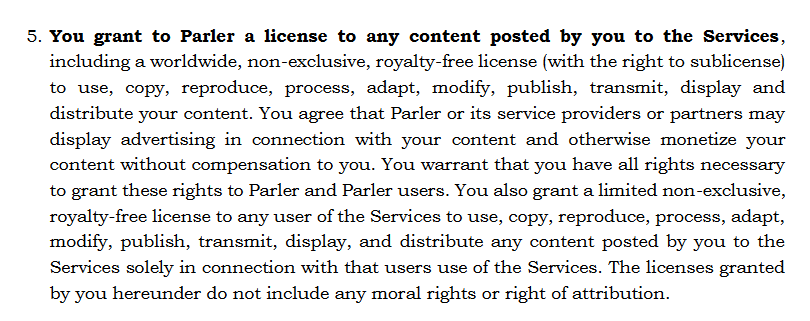
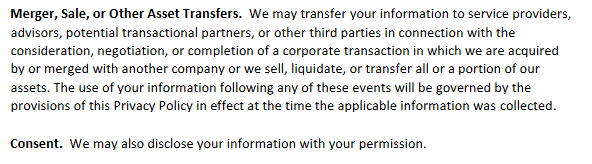
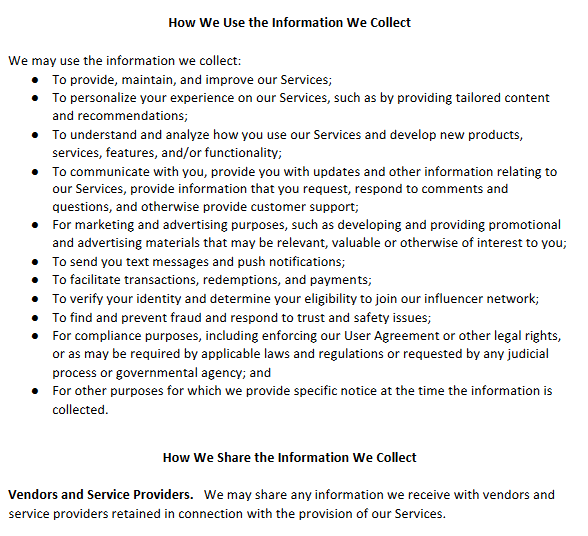
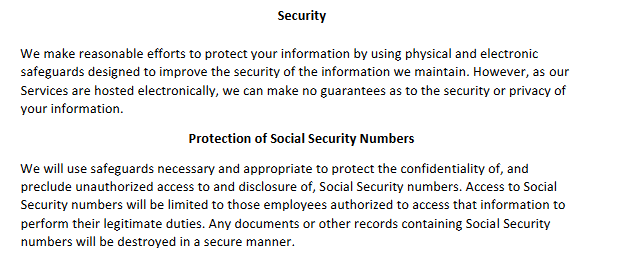
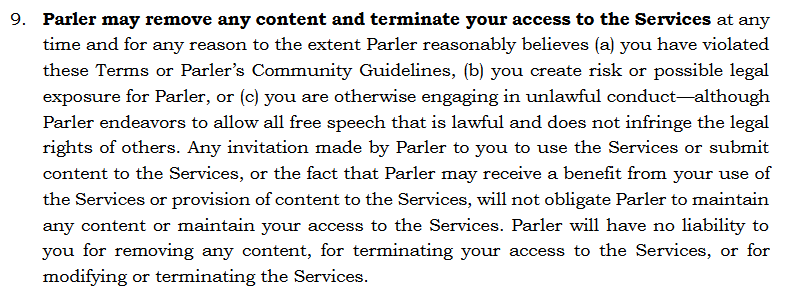
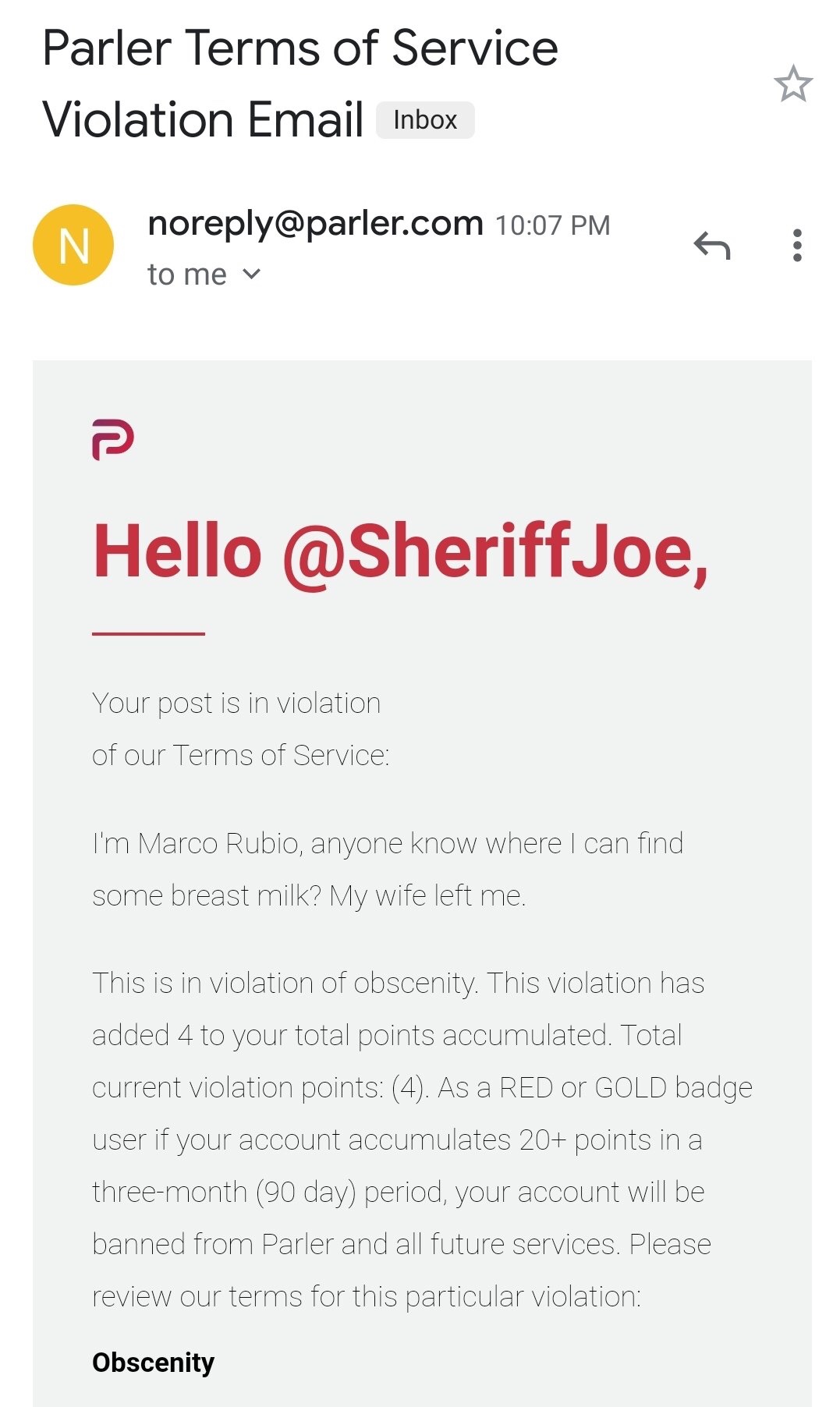
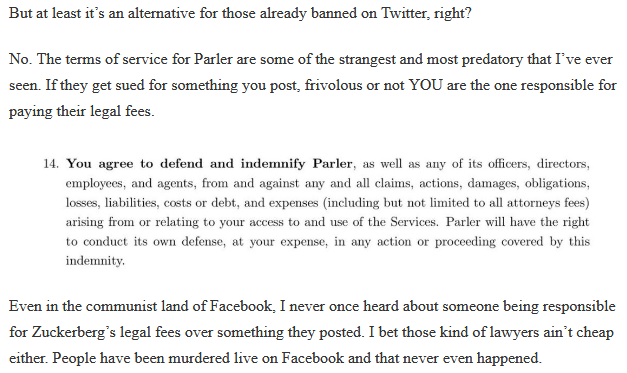

 There's a new web site that is becoming increasingly popular among social media exchanges and people trying to find a way to wade through news reports and "find the truth through the bias."

 "WHY SHOULD YOU WEAR A MASK IN PUBLIC?"
 Are you having trouble explaining to some of your friends why it is not a good idea to immediately flip back to normalcy in the wake of a pandemic outbreak?
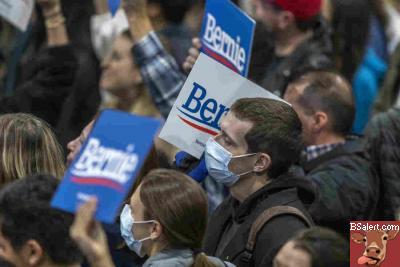 #OKMillennials...
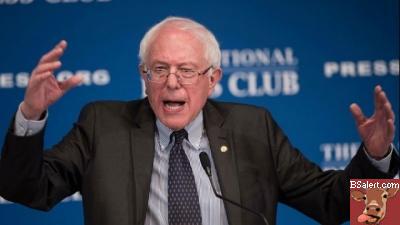 EDIT: Note that this article was originally written prior to the 2016 election, it still contains very useful information on the dynamics of the upcoming 2020 election...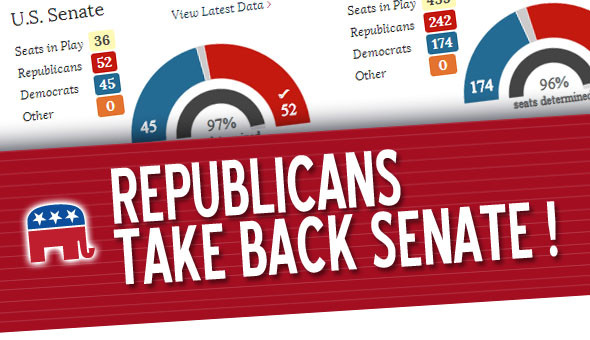
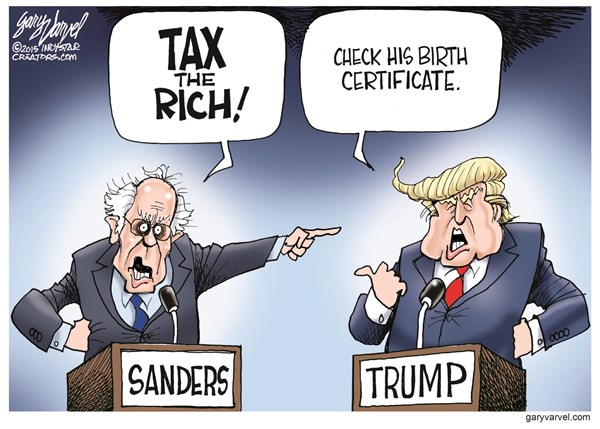 While Sanders at this point has been gracious enough to not be attacking his fellow nominees, the same cant be said for his followers who are ramping up anti-Hillary smear campaigns in every corner of cyberspace.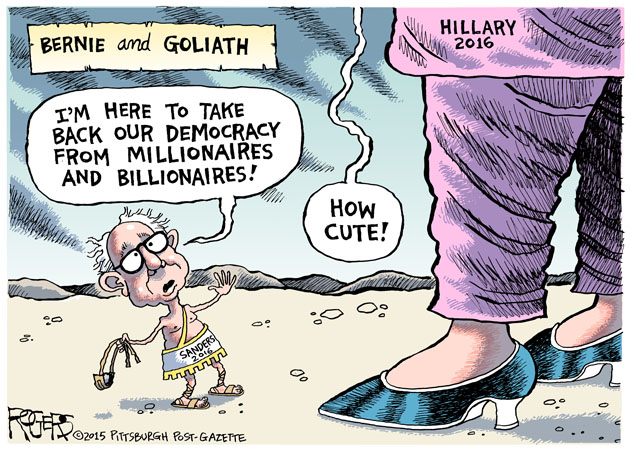

 Obama was a diversion from the prototypical "old white guy network" that has controlled the world since the dawn of modern civilization. His campaign was a sign and a rallying cry for millions who previously felt detached and disenfranchised. Likewise, Hillary could be poised to be the first woman President -- quite an elevation in the stature of a social class that less than 100 years prior, didn't have the right to vote at all. These are powerful, progressive signs.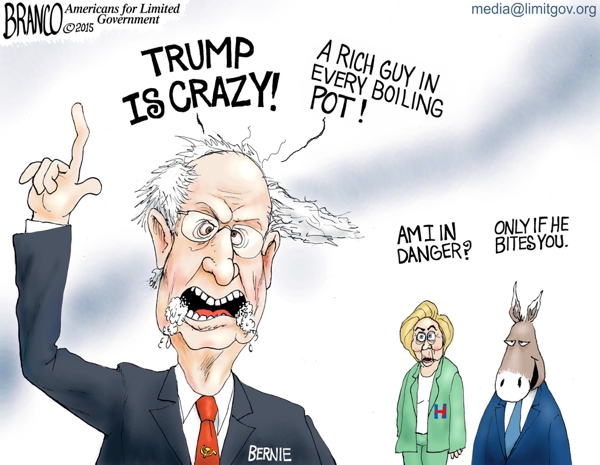
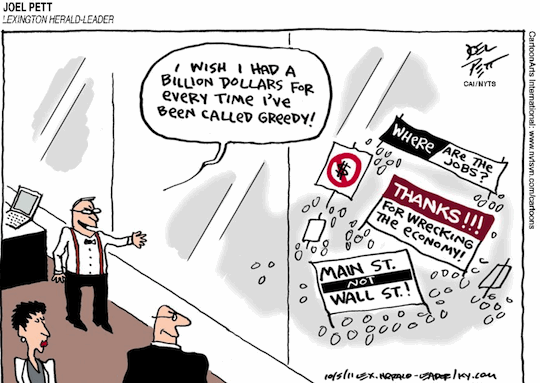
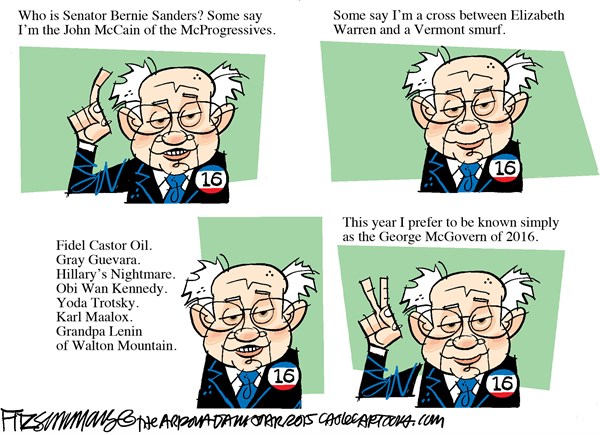
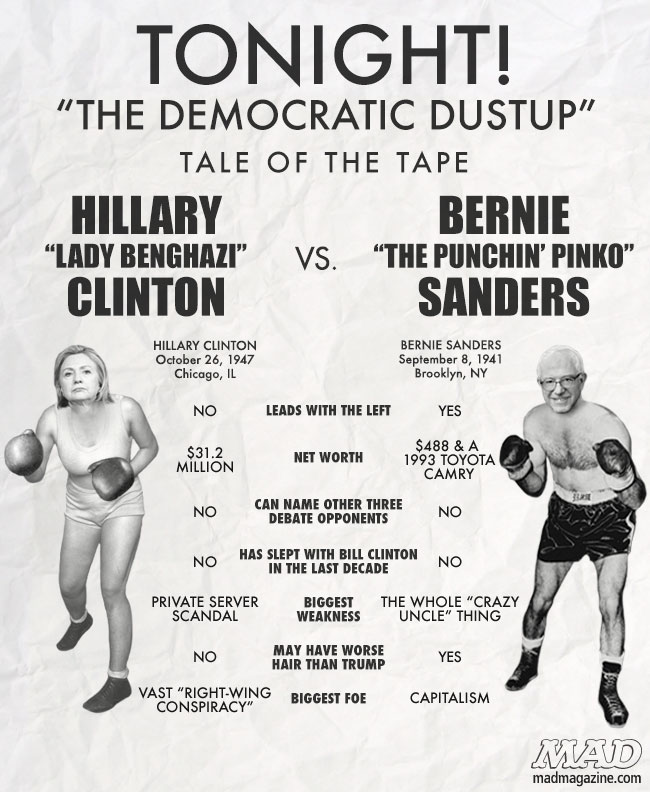 Let's examine Bernie's political history: He's been an outsider his whole life. Contrary to what some claim, he's not that good at reaching across the isle and compromising. He's been in the house and senate for 20-30 years and only got three bills he authored passed, and two of them were renaming post offices. He represents one of the tiniest states in the union and has a most
 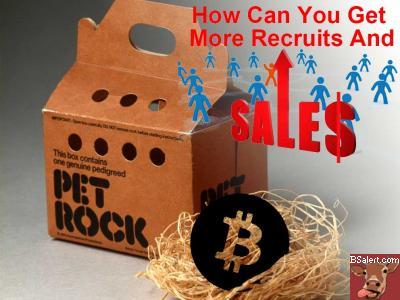 There's tremendous hype all over the Internet and the media about Bitcoin, crypto-currencies, "blockchain" and this new "innovative technology" that is supposedly making people rich.