Won't you consider registering with our site? You can unlock more features of the site, leave comments and even elect to receive our "Weekly Shoveling" - a summary of all the coolest stories added each week!
It's totally free and takes a few seconds. We don't give out your e-mail or personal information to anybody! Try it!
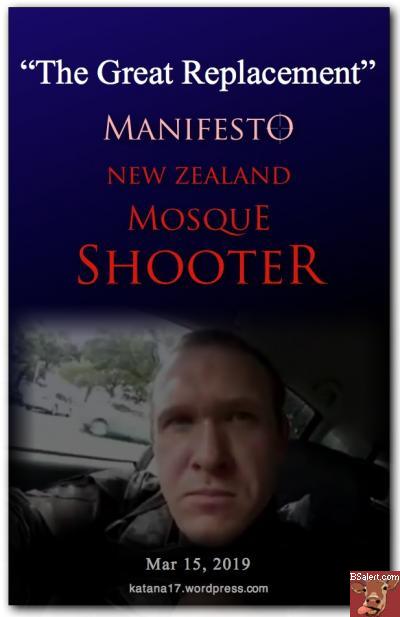
The mainstream Internet has gone out of its way to scrub any reference to the Christchurch shooter's manifesto from the Internet. While I can appreciate the desire to not make terrorists famous and as a side effect validate their atrocious activities, I think this pales in comparison to a select group of institutions deciding what is and isn't appropriate content for my adult brain to absorb, process, and compute on its own.
Therefore I took the arduous task of navigating the minefield of censorship to read the NZ Shooter's so-called "manifesto" and report what I learned... because if I linked the whole thing, chances are, this site would be erased from most Western search engines. (Yay freedom of speech!)
Note that we here at BSA are completely in favor of any site exercising their right to restrict their systems from promoting hate speech and intolerance. But it's also important to call attention to what is motivating these people - this is a key to how to stop them, and sometimes that requires diving deep into their cesspool. So here are our thoughts on this...
Some are claiming the NZ Shooter's online manifesto is a "troll." I assume that's because if you can't believe somebody would honestly believe something so retarded, it's the default position to assume they're trolls... but I've also come to respect Ockham's Razor, which suggests the simplest explanation is the most likely, which is... YES SOME PEOPLE ARE ACTUALLY THIS RETARDED.
Things I learned from reading the so-called "Manifesto", which is entitled, "The Great Replacement".
1. The fact that non-white people are reproducing faster than whites, is somehow a form of "white genocide."
"We must inevitably correct the disaster of hedonistic, nihilistic individualism. But it will take take some time, time we do not have due to the crisis of mass immigration... We are experiencing an invasion on a level never seen before in history. Millions of people pouring across our borders, legally.Invited by the state and corporate entities to replace the White people who have failed to reproduce, failed to create the cheap labour, new consumers and tax base that the corporations and states need to thrive."
What's interesting is that the terrorist recognizes there is a "serf class", but doesn't acknowledge that white people don't want to be that serf class, so what is there to do about it?
Right away, the terrorist is repurposing the language of Donald Trump and the Republicans. Of course, they denounce his actions, but we all know the mentality is shared in common.
This is important because passages like this make is apparent, this guy isn't a 100% anomaly. He's just a more extreme version of the 24% of America who still support Trump, and we can't sweep this under the rug. There have been more terrorist attacks by the alt-right in the last few years than all other demographic groups combined. This pattern is becoming a routine happening that the mainstream media continues to ignore.
Beyond that, I think nothing screams pathetic entitlement and drama queens more than this.
I don't believe they've invented an emoticon that can accurate express the degree which I would roll my eyes out of my head, and orbit a far away universe, in response to this "realization."
2. Denial isn't just a place in Egypt:
Q: Why did you carry out the attack?
To most of all show the invaders that our lands will never be their lands, our homelands are our own and that, as long as a white man still lives, they will NEVER conquer our lands and they will never replace our people.
White European dude, from Australia, whose ancestors committed genocide of the natives on the land in which he now resides, somehow believes that this is his land and everybody else are the invaders.
3. A singular emotional appeal can activate a closet psychopath to act.
Ebba was walking to meet her mother after school, when she was murdered by an Islamic attacker, driving a stolen vehicle through the shopping promenade on which she was walking. Ebba was partially deaf, unable to hear the attacker coming.
In the case of this douchebag, he credits his "activation" to a singular, issue, the death of a single pedestrian, Ebba Akerlund, who was one of five people killed and 14 people wounded when another, equally crazy psychopath hijacked a bus in Sweeden.
Chances are, there was a certain news media that harped endlessly about this one particular victim in such a way as to wind up and crystalize the hatered and intolerance that was brewing in psychopath B, based on the results of psychopath A.
4. There is not a more entitled race of people than white nationalists.
Q: Why did you carry out the attack?
To most of all show the invaders that our lands will never be their lands, our homelands are our own and that, as long as a white man still lives, they will NEVER conquer our lands and they will never replace our people.
People think this is a troll, but if you've ever talked to any bona fide racists and white nationalists, you know this mentality is actually legit. These people think this land is there land. Never mind the natives that lived here before. Ignore that. "Whiiite-man-eeeeee-fest destinyyyyyy!"
5. The attacker isn't interested in fame. He's interested in the effect of his actions and how people will respond, which is predictable to him (and others familiar with classic military strategy). We would be playing into his hands assuming he's just another crackpot, as opposed to one of the many operatives with similar missions coming out of the alt-right woodwork.
Q: Did you carry out the attack for fame?
No, carrying out an attack for fame would be laughable. After all who can remember the name of the attackers in the September 11 attack in New York? How about the attack on the pentagon? The attackers in the plane that crashed into the field on the same day?
I will be forgotten quickly.
Which I do not mind.
After all I am a private and mostly introverted person.
But the aftershock from my actions will ripple for years to come, driving political and social discourse, creating the atmosphere or fear and change that is required.
In our narcissistic mainstream society, the powers that be assume every activity is for personal gain, and that their actions cannot be anticipated and controlled. In this way, the terrorist is not wrong. The more his manifesto is censored, the more important it becomes to be read by those who are more likely to be activated.
I have no desire to encourage the guy but like any issue, this event does beg for analysis. Although I think there's a very strong case for using the attacker's manifesto as a cautionary, shameful tale. But he's right that the media will not give enough people access to even figure that out themselves, and therefore they'll play into the same fermented paranoia that bred him, among their own viewers.
The problem is, there is a lot to be learned from his words. That he's not isolated. He's a product of a propaganda assembly line...
6. The attacker is [ironically] following Osama Bin Laden's plan
Most people never read Osama Bin Laden's manifesto either, but it bears a striking resemblance to this attacker's objective: Upset the western powers and get them to perform reactionary political gestures which destabilize themselves.. in order to allow chosen forces an upper hand.
Q: Why did you choose to use firearms?
I could have chosen any weapons or means. A TATP filled rental van.
Household flour, a method of dispersion and an ignition source. A ballpeen hammer and a wooden shield. Gas, fire, vehicular attacks, plane attacks, any means were available. I had the will and I had the resources.
I chose firearms for the affect it would have on social discourse, the extra media coverage they would provide and the affect it could have on the politics of United states and thereby the political situation of the world.
The US is torn into many factions by its second amendment, along state, social, cultural and, most importantly, racial lines.
With enough pressure the left wing within the United states will seek to abolish the second amendment, and the right wing within the US will see this as an attack on their very freedom and liberty.
9/11 didn't make America stronger. It split America into two factions: those that blamed everything on Muslims and those that blamed everything on crazy psychopaths. This attacker doubles down on that tried-and-true tactic.
My first impression is he must be nuts if he thinks attack #4,709 is going to make America suddenly ban the 2nd Amendment (or that there's even any strong movement to do so.) His knowledge on this subject reads like the headlines from an alt-right web site, and not indicative of the nuances of reality which indicate that America is not split on gun rights vs gun abolition. I can see how someone who only gets their news from one source might fall prey to that fantasy, but in reality, it's gun rights vs gun responsibility. Most democrats don't want to ban guns as much as they want them treated like the dangerous devices they are and made sure people who have access are properly qualified.
But again, it's more than that. It's a mentality that permeates the shooter's mind that makes him unequipped to understand the left. His utter lack of empathy. His feeling that anybody other than his tribe (in this choice, whites) deserves basic human compassion and respect. It's all about empathy. This guy has none. And he assumes most of the world is like him, and as such, at any point can be flipped like a light switch to begin murdering each other to create/protect the "New World Order."
The one aspect of his diatribe that gives me hope is this: he's wrong about many things, but the most important thing he's wrong about, is thinking that the people are as sociopathic as their leaders. They are not. And this is true everywhere around the world in all the areas of trouble.
Immigrants who are fleeing oppression are not sociopaths. They're not the "plague of invaders." They're the respectful, consciencious people that would make society healthy. The last thing in the world we would want or need, is a community of trigger-happy racists who are ready to commit mass murder if they read the wrong news story.
So, ultimately, what we have with this "invading wave of immigrants" are people who are running away from violence and cruelty. The horrible, murderous, rapists and criminals are staying -- because they've created the scene the good people want to escape from. So it's ironic the shooter, a psychopath, is upset his community is different. That's not something that keeps me up at night. At least now, in prison, he will be among a community of like minded people.
7. Me. me. Me. Me. me. ME. Fuck YOU.
Q: Did/do you personally hate muslims?
A muslim man or woman living in their homelands? No.
A muslim man or woman choosing to invade our lands live on our soil and replace our people? Yes, I dislike them.
The only muslim I truly hate is the convert, those from our own people that turn their backs on their heritage, turn their backs on their cultures, turn their back on their traditions and became blood traitors to their own race. These I hate.
6. The terrorist was a "blue lives matter" advocate.
Like many in the marketplace of white nationalist ideas, this terrorist also believed, "blue lives matter."
Q: Did you intend to kill police officers or other enforcers of the state?
No. ... harming the NZ police officers was to be avoided at all costs unless the state enforcer was from an invaders background.
This is also coded language to those in law enforcement who are like-minded (and there are a lot of racists and fascist authoritarians in these positions). The message is not one of an isolated crazy person. It's one of an "operative" in a larger movement, signaling his peers to sit tight.. he's on "our side." A lot of these people believe that those in the army and law enforcement are their compatriots and will eventually be activated. Is this an absurd idea? If you peruse some of the online private law enforcement forums, you'll realize it's not.
7. The terrorist was a fan of Trump's white nationalist tendencies.
Q: Were/are you a supporter of Donald Trump?
As a symbol of renewed white identity and common purpose? Sure.
8. The terrorist was a troll but was poor at hiding the truth in his diatribes..
Q: Were you taught violence and extremism by video games, music, literature, cinema?
Yes, Spyro the dragon 3 taught me ethno-nationalism. Fortnite trained me to be a killer and to floss on the corpses of my enemies.
No.
9. The terrorist was funded by getting early in on the Crypto-currency Ponzi Schemes (Bitconnect in this case)
I worked for a short time before making some money investing in Bitconnect, then used the money from the investment to travel.
10. The terrorist is NOT CRAZY. He's quite intelligent and aware, and relying on, ironically, the humanity of his victims. He's completely wrong and a complete psychopath, but he's not stupid. This illustrates the difference between someone being misguided, and stupid. Those two constructs are not synonymous and we should stop making such assumptions.
Evil people can be very smart.
Q: Did you intend to survive the attack?
Yes, but death was a definite possibility. These situations are chaotic and virtually impossible to control, no matter the planning. Survival was a better alternative to death in order to further spread my ideals by media coverage and to deplete resources from the state by my own imprisonment.
I hate to say it, but ironically, many people should read this guy's manifesto. Not because they're going to be swayed. Not because they're going to give him attention he craves. But because it's important to realize this is what we're up against. Not all of these narcisstic psychopaths are idiots. Many of them are very smart, and they think multiple steps ahead. Don't underestimate these people!
One thing I notice is that the right love to "project" their ideas and thoughts upon others. And we should be paying attention to this proclivity.
For example, when one hears of a leftist protester doing some unsavory act, rather than suggest this was the isolated work of a crazy person, the right often attributes this to some kind of concerted, organized effort (i.e. "Antifa"). They're very fond of these boogymen entities that they can associate disparate perpetrators as all receiving orders from.
Why shouldn't we assume this is the way they operate? All the web sites and all the coded language... All the nudge, nudge, wink, wink stuff about their enemies? Stick a crosshair on a picture of Hillary or Pelosi? "Oh that's ridiculous that we would suggest such a thing..." Meanwhile every now and then one of them actually does take a shot at somebody. "Oh did we mean to do that?" Nudge, nudge, wink, wink... If you dive into some of the hardcore white nationalist sites like Stormfront, their creators enumerated this exact strategy: work towards a singular purpose with organizational efficiency, but deny such an organization exists.
So how many of these very specifically-branded and modeled right wing terrorists have to appear before it becomes obvious there is an operation going on? How many are more than mere coincidence?
How many of these terrorists (such as this one) actually admit there is an operation going on? And at what point are we going to start putting 2 and 2 together?
American libertarians are less a political party and more like a fundamentalist religious group who believe that the free market is their lord and savior. Here's why their platform might sound charmingly weird in theory, but in practice it's harmful.
While everybody is remembering 9/11, here's something to think about.
Everybody says, "9/11 never forget"
What exactly are we supposed to remember?
What do most people remember about 9/11?
What is the purpose of remembering?
Is it to continue to harbor fear and anger?
Is it to continue to remember to hate Muslims?
Do most people even know why 9/11 happened?
Do they know that since 9/11, America has doubled down on the middle eastern policies that brought about 9/11? (Most recently with Trump wanting to put a US embassy in Palestine)
Do people remember that almost all the 9/11 attackers were Saudi Arabian, and that America has never waivered from their loyal support of the Saudis, going so far as to enact travel bans on virtually all other Muslim middle eastern countries EXCEPT Saudi Arabia? Even though Saudi Arabia has some of the worst human rights records in the world?
Does anybody remember we blew $7 Trillion invading Iraq after 9/11 and they had nothing to do with the attack?
Do people remember 4000+ American servicemen died in the Iraq invasion that was perpetrated by the George W. Bush administration? All based on lies that our own intelligence community exposed?
Do people remember the Bush administration violated international law setting up covert torture prisons around the world? They renamed "torture" to "enhanced interrogation techniques" to pretend what they were doing was legal.
Do people remember that, to date, NOBODY has been held accountable for the huge mess that was made?
I'm cool with people "Never forgetting" as long as they're remembering EVERYTHING THAT REALLY HAPPENED.
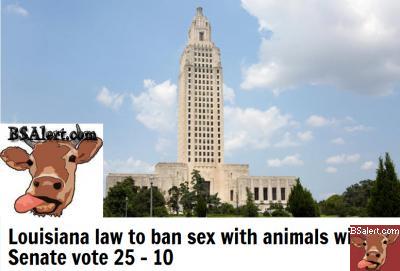
The Louisiana Senate voted on April 10th, on a bill criminalizing sex with animals. The measure passed on a vote of 25 to 10 in favor (with 4 abstaining).
The bill's author, New Orleans Senator JP Morrell says it's important that the state has a way to arrest someone for having sex with animals.
He told fellow lawmakers, "God forbid you vote against this bill, good luck explaining it."
Ten senators did vote against it.
Here are LA's "Bestiality Ten" - Make 'em famous!
Louisiana's "Beastiality TEN"
These 10 Louisiana State sentators voted AGAINST a bill criminalizing sex with animals.
1. Republican - President of the Senate: Senator John A. Alario, Jr., alarioj@legis.la.gov
2. Republican - Senator R. L. Bret Allain, II, allainb@legis.la.gov
3. Republican - Senator James R. "Jim" Fannin, fanninj@legis.la.gov
4. Republican - Senator Jonathan W. Perry, perryj@legis.la.gov
5. Republican - Senator Ryan Gatti, gattir@legis.la.gov
6. Republican - Senator Neil Riser, risern@legis.la.gov
7. Republican - Senator Jack Donahue, donahuej@legis.la.gov
8. Republican - Senator Dan Claitor, claitord@legis.la.gov
9. Republican - Senator Gerald Long, longg@legis.la.gov
10. Republican - Senator Beth Mizell, mizellb@legis.la.gov
In fairness, the bill did a few other things, most notably, it replaced an earlier law that outlawed, "Crimes Against Nature" that also was the infamous anti-"sodomy" law used to shame homosexuality, that was ruled unconstitutional in 2003. So lawmakers who voted against this bill can arguably claim they're not necessarily as much in favor of animal sex as they are homophobic assholes.
Computer/console games continue to become more advanced, graphical and intense, now resembling mini-operas of realism and, in many cases, blood and gore.
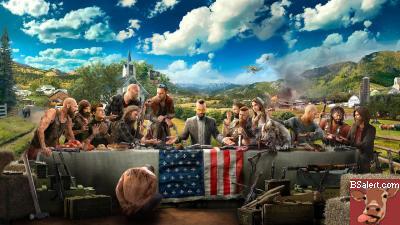
But are they going too far? The latest version of the popular Far Cry series, called "Far Cry 5" seems to alternatively criticize and glorify the rise of right wing, religious extremists in what some might consider a very realistic manner. But nowhere does this become more creepy and weird when you examine you choice of the game's three possible ending cinematic sequences. See for yourself...
**SPOILER ALERT** If you're not interested in playing through the games 14+ hour run time to see where it goes, continue to read this article..
Before we show you the endings, let's set the stage for this game for those who don't know.
Basically, the setting is rural Montana. A very David-Koresh-like doomsday religious cult leader is charged with kidnapping and the local sheriff is tasked to arrest him... this process causes the cult to activate into a paramilitary group, that takes over three regions on the game map, that you're tasked with liberating. The group also is cultivating some kind of drug that is used to control and brainwash people.
You play one of the "good" guys, who is with the local law enforcement, but at some point you're captured, given drugs and brainwashed into being a killing machine that is activated by a certain song.
The game is composed of a variety of missions where you wander around the map killing everything in sight, including tons of wild animals that apparently have all become rabid due to foraging on these cult drug flowers.
Far Cry 5 is one of those GTA-like games where you can wander around on the map and explore, and there's much to see and do and the terrain is quite beautiful. You complete missions to earn things and become stronger and more powerful. You collect weapons and various items as is common in these games.
Throughout the game though, there are cut scenes and narratives weaving into the open gameplay, teaching you about the purpose (and obsessive nature) of the religious group. For anyone familiar with the history of many protestant factions of Christianity, this "fictional lore" is a little too realistic, and for this reason, it's not out of the realm of possibility for certain factions of people to identify with the supposed "bad guys" in the game. In fact, that's what many may end up doing, which becomes obvious when you examine the endings...
The question is, how far can you go in these games before it might be worthwhile to argue over the value of certain narratives being promoted? You can decide... In an age where we have rampant domestic terrorism that seems similarly modeled after the ideology of characters in this series, it has to make you wonder what the developers were thinking?
Let's set up the three endings...
There are 3 endings in the video below.. the first and the third happen at the end of the game. The middle one happens at the beginning of the game.
1. At the end of the game, after liberating 2 of the 3 regions, you confront the head of the cult. He gives you a chance to walk away like he did in the beginning. You can choose to walk away or resist.
2. At the end of the game, you choose to continue to resist the cult leader.
3. A the beginning of the game, you can end the game in the first few minutes by choosing not to arrest the cult leader. If you walk away, the credits roll... this ironically, is the most moral and socially palatable ending of the three.
The second option is the most likely, and it shows you a rather bizarre outcome that ultimately has to make you wonder, WTF is up with the developers?
Records posted Tuesday by the Electronic Frontier Foundation following a freedom of information lawsuit filed last year reveal that federal agents would pay Geek Squad managers who pass on information about illegal materials on devices sent in by customers for repairs.
The relationship goes back at least ten years, according to documents released as a result of the lawsuit.
The aim of the FBI's Louisville division was to maintain a "close liaison" with Geek Squad management to "glean case initiations and to support the division's Computer Intrusion and Cyber Crime programs," the documents say.
According to the EFF's analysis of the documents, FBI agents would "show up, review the images or video and determine whether they believe they are illegal content" and seize the device so an additional analysis could be carried out at a local FBI field office.
That's when, in some cases, agents would try to obtain a search warrant to justify the access.
The EFF's lawsuit was filed in response to a report that a Geek Squad employee was used as an informant by the FBI in the prosecution of a case involving child abuse imagery.
One released document showed a $500 payment by the FBI to a "confidential human source" whose name was redacted that the EFF said was the same amount as a payment made in the prosecution of Mark Rettenmaier, a California physician and surgeon who was charged with possessing child abuse imagery, found after he sent in his computer to Best Buy for repairs.
The documents show that the FBI would regularly use Geek Squad employees as confidential human sources -- the agency's term for informants -- by taking calls from employees when they found something suspect.
But that relationship and data handover could violate Americans' constitutional rights to protections from unwarranted searches and seizures, the privacy group charges.
Because the FBI uses Geek Squad as informants, the EFF says that any search should be seen as a warrantless search carried out by proxy, "and thus any evidence obtained as a result of the illegal searches should be thrown out of court."
Dallas sportscaster, Dale Hansen steps away from the sports desk to deliver an insightful yet scathing monologue on the country's current inability to address the increasing domestic terrorist problem.
While the mainstream media focuses on today's accused sexual harasser, are women overall losing the war? Are they being distracted and misdirected at low-hanging-fruit? A very insightful editorial published in the New York Times raises the question...
It would be easy to end 2017 with the impression that, whatever its afflictions, it was at least a game-changing year for feminism.
“The Female Revolution Is Here” and could “Smash Patriarchy at Its Core,” social and mainstream media headlines declared. “We are blowing the whistle on the prime directive of the master/slave relationship between women and men.” “This is the end of patriarchy” — this from Forbes! — “the male domination of humanity.” Twitter, the newsstand and the street concur: This year witnessed a transformational moment in American sexual politics.
Surely the results of the #MeToo phenomenon are worthy. It’s a seriously good thing Harvey Weinstein is gone and that the potential Harvey Weinsteins will think twice or thrice or a thousand times before harassing women whose fortunes they control. But “the end of patriarchy”? Look around.
This month, President Trump signed into law a tax bill that throws a bomb at women. The Tax Cuts and Jobs Act systematically guts benefits that support women who need support the most: It means an end to personal and dependent exemptions (a disaster for minimum-wage workers, nearly two-thirds of whom are women). An expiration date for child-care tax credits and a denial of such credits for immigrant children without Social Security cards. An end to the Affordable Care Act’s individual mandate. And, barely avoided, thanks to Democrats’ objections: an enshrinement of “fetal personhood” in the form of college savings accounts for unborn children, a sly grenade lobbed at legal abortion.
Not to mention that Republican congressmen plan to pay down the enormous federal deficit the bill will incur by slashing entitlements that, again, are critical to women: Medicaid (covering nearly half the births in the nation and 75 percent of family planning), Medicare (more than half of beneficiaries 65 and older — and two-thirds of those 85 and older — are women) and so on.
And that’s on top of all the other Trump administration insults: reviving the global gag rule on abortion, suspending tracking of the gender wage gap, deep-sixing the Fair Pay and Safe Workplaces executive order and much more.
Which leads me to wonder, if we get rid of a handful of Harveys while losing essential rights and protections for millions of women, are we really winning this thing? How is this female calamity happening in the midst of the Female Revolution? An answer may lie in a schism that has haunted women’s protest for 150 years.
American women’s activism has historically taken two forms. One is an expression of direct anger at the ways individual men use and abuse us. It’s righteous outrage against the unambiguous enemy with a visible face, the male predator who feeds on our vulnerability and relishes our humiliation. Mr. Weinstein’s face is the devil’s face du jour, and the #MeToo campaign fits squarely in this camp. The other form is less spectacular but as essential: It’s fighting the ways the world is structurally engineered against women. Tied to that fight is the difficult and ambiguous labor of building an equitable system within which women have the wherewithal and power to lead full lives.
The clarion cry against individual male predation and the push for broader gender equality may seem part and parcel, especially now. When Donald Trump is the titular head of the machine, it’s tempting to imagine that the machine itself has orange hair — and that to defeat Harvey Weinstein is to win. But the patriarchy is bigger than the patriarch.
The two forms of women’s protest intersect, of course. Just ask generations of female workers at Ford Motor Company, who know that workplace sexual harassment undergirds a system of oppression. But fighting the patriarch and fighting the patriarchy are also distinct — and the former tends to be more popular than the latter. It’s easier to mobilize against a demon, as every military propagandist — and populist demagogue — knows. It’s harder, and less electrifying, to forge the terms of peace. Declaring war is thrilling. Nation building isn’t.
How this plays out in feminism has been evident since the 19th century, when American women started the “social purity” movement against prostitution and “white slavery” of girls. The most popular women’s mobilization of the 19th century wasn’t for suffrage — it was for Prohibition, a moral crusade against demon men drinking demon rum, blowing their paychecks at the saloon and coming home to beat and rape their wives. The Women’s Christian Temperance Union quickly became the nation’s largest women’s organization.
Did that war against men behaving badly feed into the larger battle for women’s equality? In many ways, yes: Susan B. Anthony herself began as a temperance organizer. But a good number of women who railed against alcohol’s evils shrank from women’s suffrage. Fighting against male drunkenness fell within the time-honored female purview of defending the family and the body; extending women’s rights into a new political realm felt more radical and less immediate. Frances Willard, the temperance union’s formidable second president, eventually brought the organization around to supporting the female franchise by redefining the women’s vote as a “home protection” issue: “citizen mothers,” as the morally superior sex, would purge social degeneracy from the domestic and public circle. But Willard’s attempt to further conjoin morality efforts with the second form of activism — her “Do Everything” campaign for a shorter workweek, a living wage, health care and prison reform, among other things — was snuffed out upon her death, as the union’s leadership abandoned its support for broader social reform.
The challenge today is the one faced by Anthony and Willard: how to bring the outrage over male malfeasance to bear on the more far-reaching campaign for women’s equality. Too often, the world’s attention seems to have room for only the first.
A few weeks ago on a chilly morning in Pittsburgh, two women named Chelsey Engel and Lindsey Disler chained themselves to the entrance of the building that houses Senator Pat Toomey’s local office to protest the tax bill. “The situation is so catastrophic and so dire,” Ms. Disler said, her scarf-swathed torso shackled to the doors. “Something has to be done.” She delivered her words to two dozen onlookers and a few police officers, who, by 8:30 a.m., had sent the two women packing. Their protest barely registered outside a few area news outlets, on a day when the media was aflutter with reports of the latest celebrity accused of harassment, Peter Martins, director of New York City Ballet.
The two forms of female protest can even be positioned against each other. In the 1980s, the “War on Pornography” campaign set off the damaging “sex wars” within the women’s movement itself, at the very moment when a backlash against women’s equality was amassing its forces and Ronald Reagan’s administration was formulating policies that would disproportionately hurt half the country. The “sex-positive” feminists who worried about restrictions on free speech and questioned the condemnation of all pornographic material found themselves labeled, by anti-pornography feminists, as shills and pimps for the industry. Today we’re already seeing the long knives come out for sister travelers who have called for some due process and proportionality in confronting male harassers.
A similar quarrel surfaced in Hillary Clinton’s defeat last year. Some feminist-minded women deemed her an unacceptable choice to pursue the art of dealing and compromising necessary to running the state — and running it to the greater benefit of women — because she’d already compromised herself by staying with, and defending, Bill Clinton.
The forces behind this divide are so intractable in part because they are so psychological. To fight the devil is to be on the side of the angels, to assume the mantle of virtue and purity. The political arena, by contrast, is no place for angels, and its victories are slow and often incomplete. Without gainsaying the courage of “silence breakers,” one can note the flip side: that their words, especially now, can generate instant, and dramatic, response — and more immediate gratification than one gets from protesting economic and legal structures.
- By SUSAN FALUDIDEC. 28, 2017, New York Times Editorial Page
Noted economist, Robert Reich outlines his "Big picture" of what's happened to America over the last 80+ years and where we're going. A simple, yet powerful outline of the path and trajectory our country has been headed..
Pursuant to Section 230 of Title 47 of the United States Code (47 USC § 230), BSAlert is a user-contributed editorial web site and does not endorse any specific content, but merely acts as a "sounding board" for the online community. Any and all quoted material is referenced pursuant to "Fair Use" (17 U.S.C. § 107). Like any information resource, use your own judgement and seek out the facts and research and make informed choices.
Powered by Percleus (c) 2005-2047 - Content Management System


 Bumper Sticker Store



 In celebration of the recent elevation in Bitcoin price, we thought it was apropos to publish a revised "investment guide"..
 The mainstream Internet has gone out of its way to scrub any reference to the Christchurch shooter's manifesto from the Internet. While I can appreciate the desire to not make terrorists famous and as a side effect validate their atrocious activities, I think this pales in comparison to a select group of institutions deciding what is and isn't appropriate content for my adult brain to absorb, process, and compute on its own.

 While everybody is remembering 9/11, here's something to think about.
 The Louisiana Senate voted on April 10th, on a bill criminalizing sex with animals. The measure passed on a vote of 25 to 10 in favor (with 4 abstaining).
 Computer/console games continue to become more advanced, graphical and intense, now resembling mini-operas of realism and, in many cases, blood and gore.
 Records posted Tuesday by the Electronic Frontier Foundation following a freedom of information lawsuit filed last year reveal that federal agents would pay Geek Squad managers who pass on information about illegal materials on devices sent in by customers for repairs.
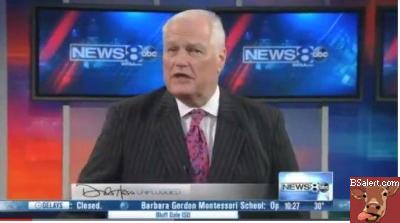 Dallas sportscaster, Dale Hansen steps away from the sports desk to deliver an insightful yet scathing monologue on the country's current inability to address the increasing domestic terrorist problem.
 While the mainstream media focuses on today's accused sexual harasser, are women overall losing the war? Are they being distracted and misdirected at low-hanging-fruit? A very insightful editorial published in the New York Times raises the question...